
Real Heroes Major Somnath Sharma
Param Vir Chakra (posthumous), the first ever awardedपरमवीर चक्र (मरणोपरांत), देश का पहला परमवीर चक्र
Major Somnath Sharmaमेजर सोमनाथ शर्मा
Jammu and Kashmir, 1947जम्मू-कश्मीर, 1947
- Leading from the frontआगे बढ़कर नेतृत्व
- Duty before selfपहले कर्तव्य, फिर स्वयं
- Never giving upकभी हार न मानना
The storyकहानी
This is the story of Major Somnath Sharma, the first soldier of free India to receive the Param Vir Chakra, our country's highest award for bravery in war.
यह कहानी है मेजर सोमनाथ शर्मा की, आज़ाद भारत के उस पहले सैनिक की, जिन्हें परमवीर चक्र मिला। परमवीर चक्र युद्ध में बहादुरी के लिए हमारे देश का सबसे बड़ा सम्मान है।
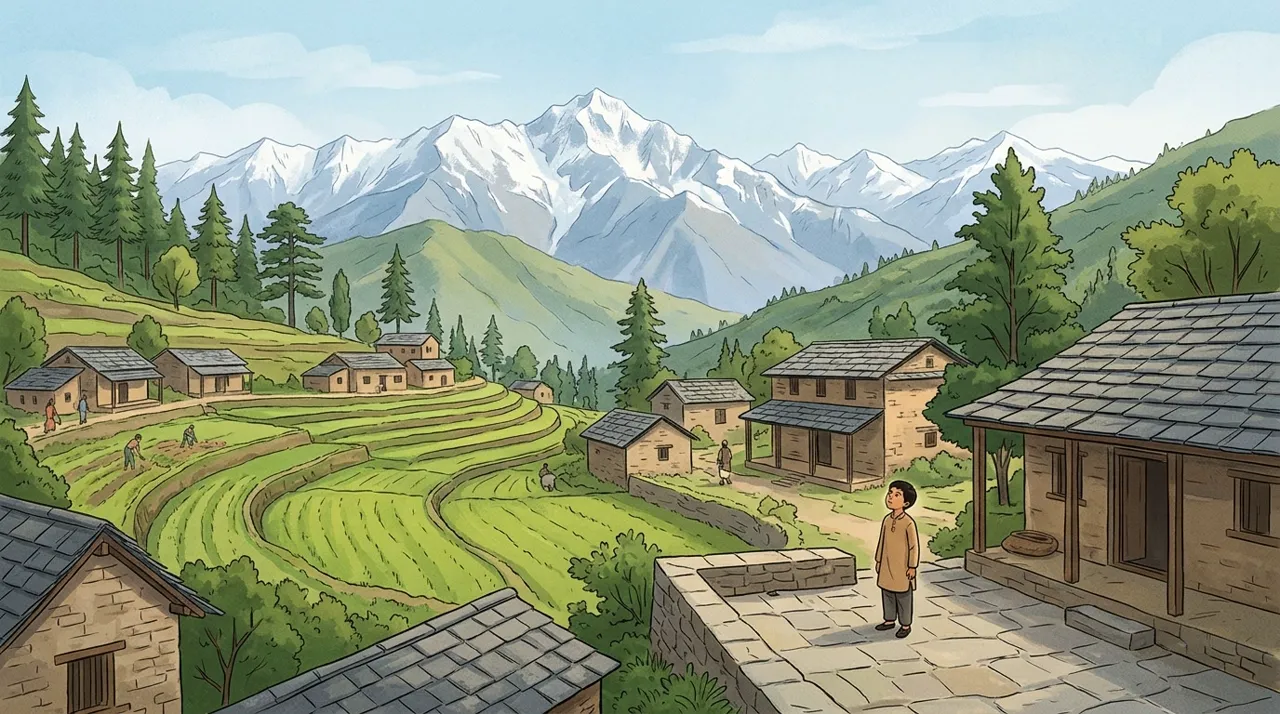
Somnath was born in 1923 in Kangra, in the hills of today's Himachal Pradesh, into a family of soldiers. He became an army officer at a young age, and by the age of twenty-four he was a Major, commanding a company of the Kumaon Regiment.
सोमनाथ का जन्म 1923 में आज के हिमाचल प्रदेश के कांगड़ा में, सैनिकों के एक परिवार में हुआ। वे कम उम्र में ही सेना में अफ़सर बने, और चौबीस साल की उम्र में मेजर बनकर कुमाऊँ रेजिमेंट की एक कंपनी की कमान संभाल रहे थे।
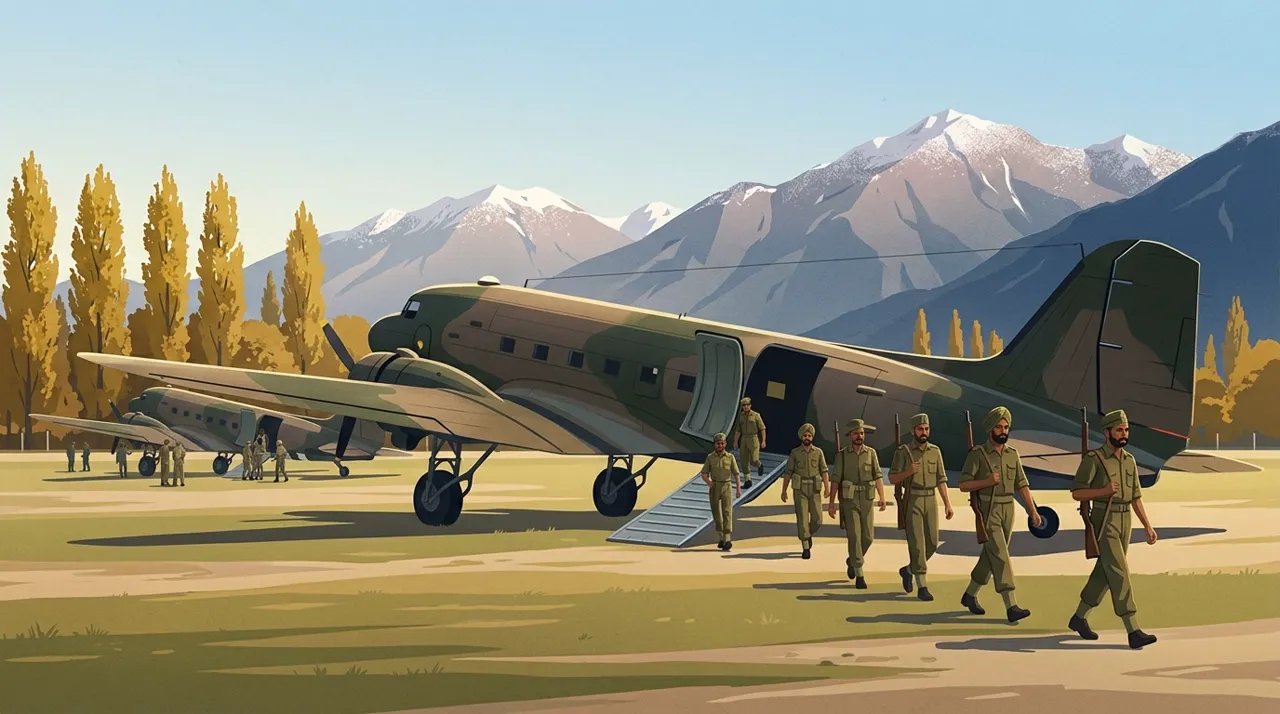
In October 1947, just weeks after independence, armed raiders from across the border poured into the Kashmir Valley. Indian troops were flown into Srinagar to protect the city and its airfield. Somnath's left hand was in a plaster cast from a hockey injury, but he insisted on going with his men.
अक्टूबर 1947 में, आज़ादी के कुछ ही हफ़्तों बाद, सीमा पार से हथियारबंद हमलावर कश्मीर घाटी में घुस आए। श्रीनगर शहर और उसके हवाई अड्डे की रक्षा के लिए भारतीय सैनिकों को हवाई जहाज़ से वहाँ पहुँचाया गया। हॉकी खेलते हुए लगी चोट के कारण सोमनाथ का बायाँ हाथ प्लास्टर में था, फिर भी उन्होंने अपने जवानों के साथ जाने की ज़िद की।
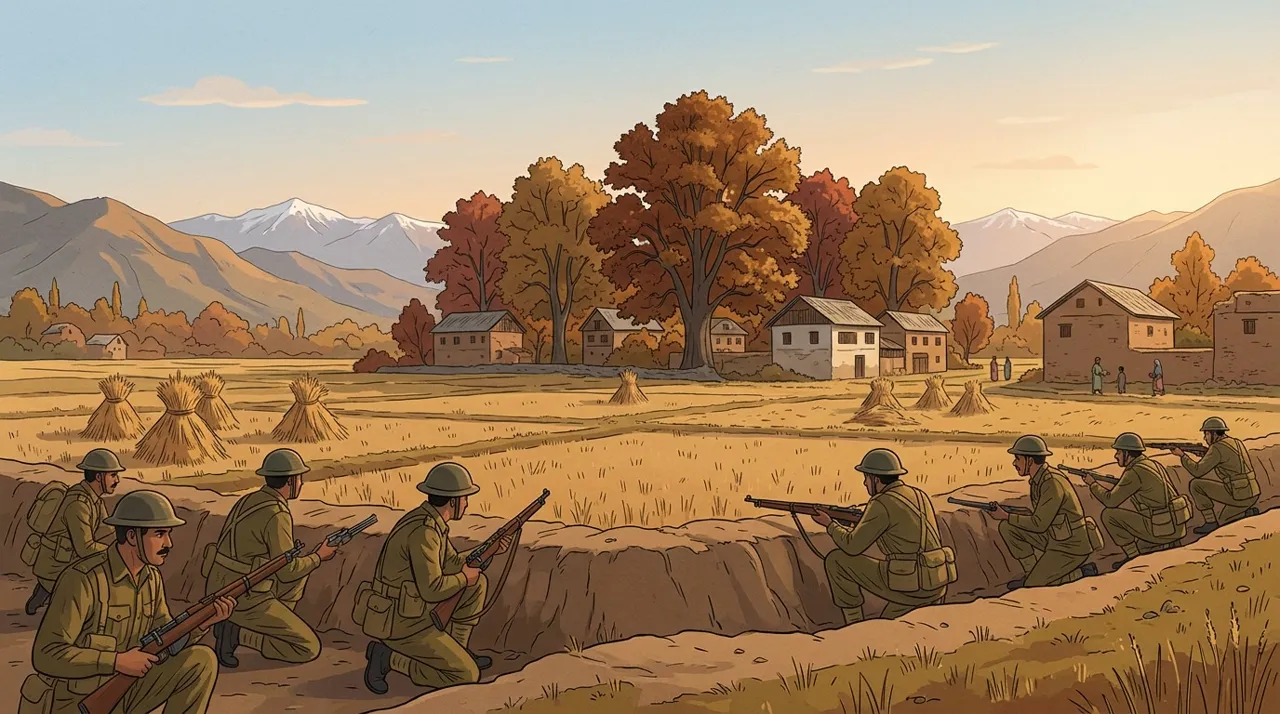
On the third of November, his company was sent to the village of Badgam, a few kilometres from the airfield. That afternoon, about five hundred raiders attacked from three sides. Somnath's company was outnumbered many times over.
तीन नवंबर को उनकी कंपनी को हवाई अड्डे से कुछ किलोमीटर दूर बडगाम गाँव भेजा गया। उस दोपहर लगभग पाँच सौ हमलावरों ने तीन तरफ़ से हमला कर दिया। सोमनाथ की कंपनी के जवान उनसे कई गुना कम थे।
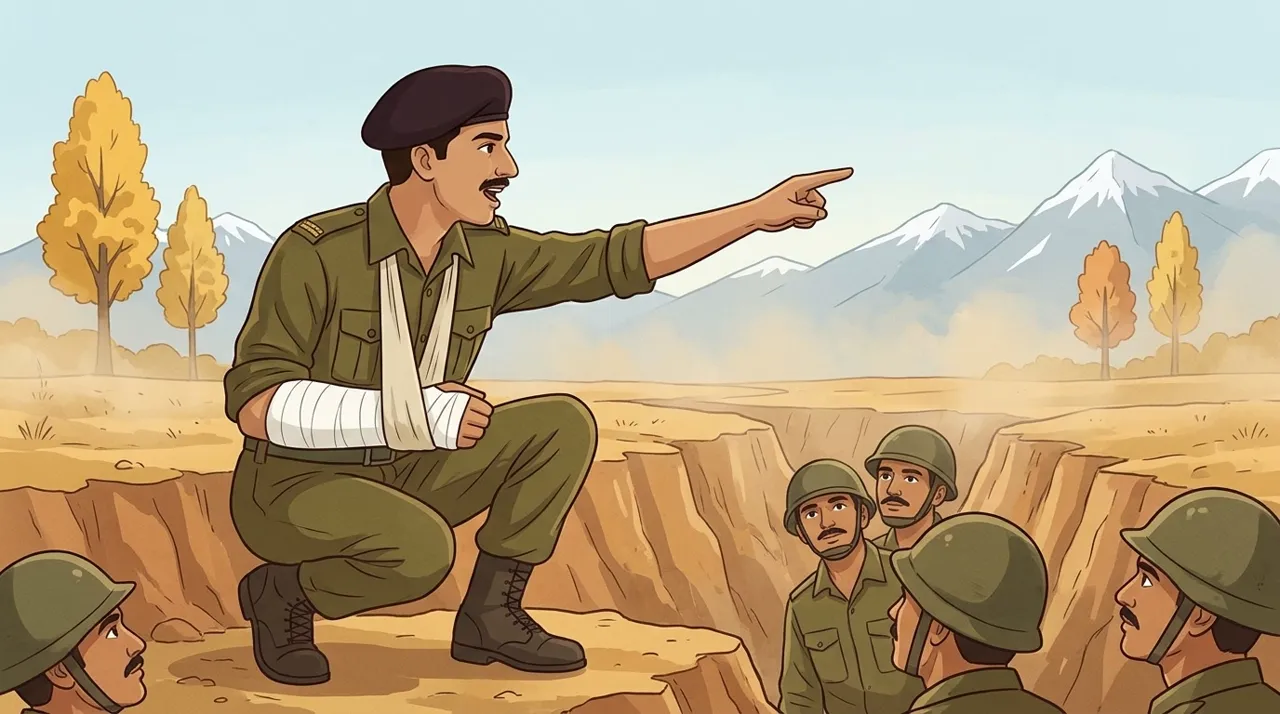
Somnath knew that if Badgam fell, the airfield and Srinagar would be in danger. So he ran from trench to trench across open ground, under heavy fire, urging his men to hold on. He even laid out strips of cloth on the ground, so that Indian aircraft could see where the enemy was.
सोमनाथ जानते थे कि अगर बडगाम हाथ से गया, तो हवाई अड्डा और श्रीनगर दोनों ख़तरे में पड़ जाएँगे। इसलिए वे भारी गोलीबारी के बीच खुले मैदान में एक मोर्चे से दूसरे मोर्चे तक दौड़ते रहे, और अपने जवानों का हौसला बढ़ाते रहे। उन्होंने ज़मीन पर कपड़े की पट्टियाँ भी बिछाईं, ताकि भारतीय विमान देख सकें कि दुश्मन कहाँ है।
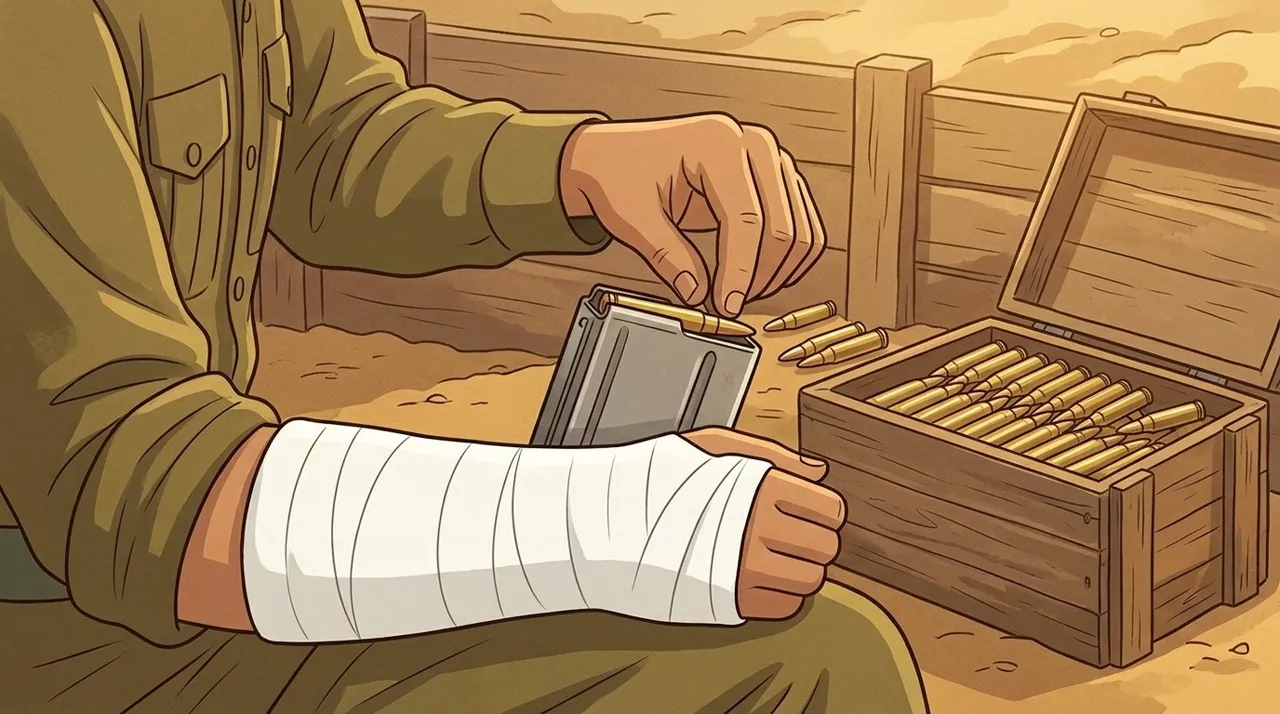
As his men were wounded, their guns began to fall silent. So Somnath, with one hand still in plaster, started filling magazines himself and handing them to his machine gunners.
जैसे-जैसे जवान घायल होते गए, उनकी बंदूकें शांत पड़ने लगीं। तब सोमनाथ ने, एक हाथ प्लास्टर में होते हुए भी, खुद मैगज़ीन में गोलियाँ भरनी शुरू कीं और उन्हें अपने मशीनगन चलाने वाले जवानों को देते रहे।
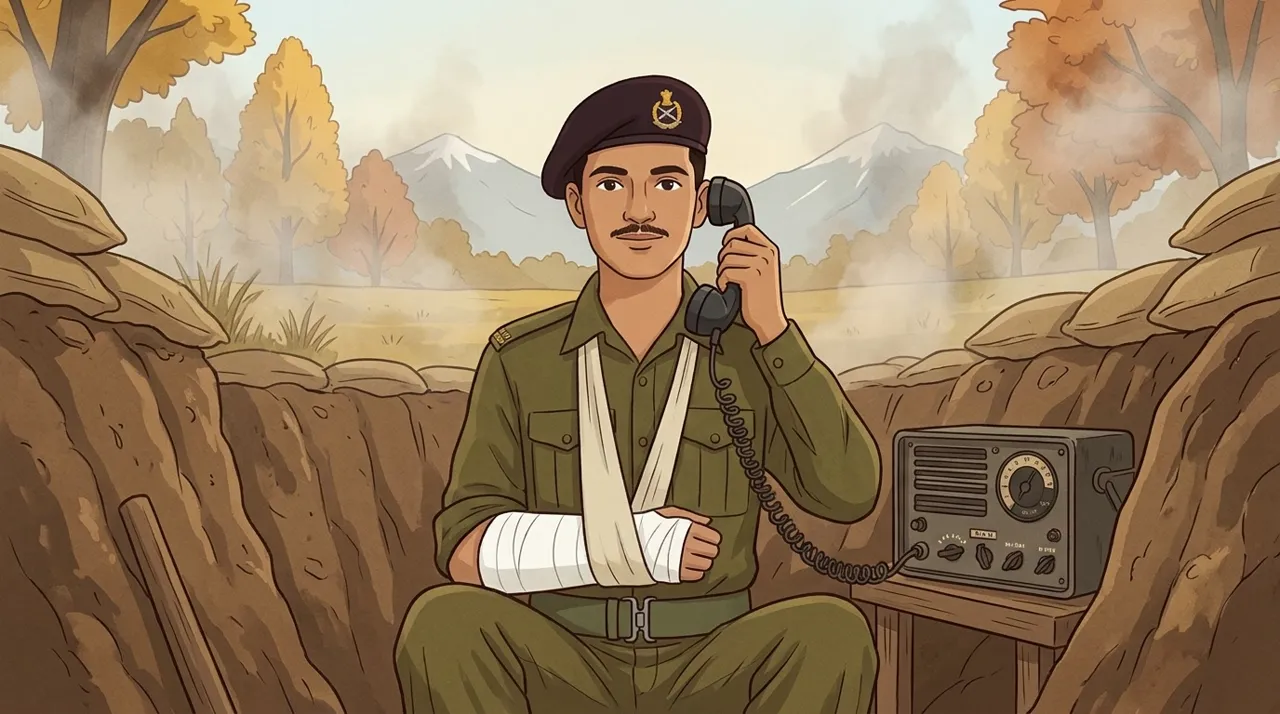
His last message to his headquarters was this: "The enemy are only fifty yards from us. We are heavily outnumbered. We are under devastating fire. I shall not withdraw an inch, but will fight to the last man and the last round." Moments later, a mortar shell exploded beside him, and Major Somnath Sharma gave his life for his country.
मुख्यालय को भेजा गया उनका आख़िरी संदेश था: "दुश्मन हमसे सिर्फ़ पचास गज़ दूर है। हम संख्या में बहुत कम हैं। हम पर भयंकर गोलीबारी हो रही है। मैं एक इंच भी पीछे नहीं हटूँगा, आख़िरी जवान और आख़िरी गोली तक लड़ूँगा।" कुछ ही पल बाद पास में एक मोर्टार का गोला फटा, और मेजर सोमनाथ शर्मा ने देश के लिए अपने प्राण न्योछावर कर दिए।
His company fought on. According to his official citation, the raiders were held up for six hours. Those six hours gave reinforcements time to take up position and stop the advance, and this helped save Srinagar and its airfield.
उनकी कंपनी लड़ती रही। उनके आधिकारिक प्रशस्ति-पत्र के अनुसार, हमलावर छह घंटे तक आगे नहीं बढ़ पाए। इन छह घंटों में और सैनिक मोर्चे पर पहुँच गए और हमले को रोक दिया, और इससे श्रीनगर व उसके हवाई अड्डे को बचाने में मदद मिली।
In 1950, Major Somnath Sharma became the first person ever to receive the Param Vir Chakra. His story reminds us that true leaders go first, stand with their team, and never give up on the people who depend on them.
1950 में मेजर सोमनाथ शर्मा परमवीर चक्र पाने वाले पहले व्यक्ति बने। उनकी कहानी हमें सिखाती है कि सच्चा नेता सबसे आगे चलता है, अपनी टीम के साथ खड़ा रहता है, और जो लोग उस पर भरोसा करते हैं, उन्हें कभी अकेला नहीं छोड़ता।
The official citationआधिकारिक प्रशस्ति-पत्र
Read the Param Vir Chakra citation (in English, as published; for teachers and classes 9 to 12)परमवीर चक्र का प्रशस्ति-पत्र पढ़ें (अंग्रेज़ी में, जैसा प्रकाशित हुआ; शिक्षकों और कक्षा 9 से 12 के लिए)
On 3 November 1947, Major Somnath Sharma's company was ordered on a fighting patrol to Badgam in the Kashmir Valley. He reached his objective at first light on 3 November and took up a position south of Badgam at 11:00 hours. The enemy, estimated at about 500 attacked his company position from three sides; the company began to sustain heavy casualties. Fully realizing the gravity of the situation and the direct threat that would result to both the aerodrome and Srinagar via Hum Hom, Major Somnath Sharma urged his company to fight the enemy tenaciously. With extreme bravery he kept rushing across the open ground to his sections exposing himself to heavy and accurate fire to urge them to hold on. Keeping his nerve, he skilfully directed the fire of his sections into the ever-advancing enemy. He repeatedly exposed himself to the full fury of enemy fire and laid out cloth strips to guide our aircraft onto their targets in full view of the enemy. Realising that casualties had affected the effectiveness of his light automatics, this officer whose left hand was in plaster, personally commenced filling magazines and issuing them to the light machine gunners. A mortar shell landed right in the middle of the ammunition resulting in an explosion that killed him. Major Sharma's company held on to this position and the remnants withdrew only when almost completely surrounded. His inspiring example resulted in the enemy being delayed for six hours, thus gaining time for our reinforcements to get into position at Hum Hom to stem the tide of the enemy advance. His leadership, gallantry and tenacious defence were such that his men were inspired to fight the enemy by seven to one, six hours after this gallant officer had been killed. He has set an example of courage and qualities seldom equalled in the history of the Indian Army. His last message to the Brigade Headquarters a few moments before he was killed was, 'the enemy are only 50 yards from us. We are heavily outnumbered. We are under devastating fire. I shall not withdraw an inch but will fight to the last man and the last round.'Gazette of India notification 2 Pres/50, 21 June 1950
Where accounts differजहाँ विवरण अलग हैं
Sources give the raiders' strength as about 500 (the citation), about 700 or about 1,000. The story uses the citation's figure. The six-hour delay also comes from the citation.
हमलावरों की संख्या अलग-अलग स्रोतों में लगभग 500 (आधिकारिक प्रशस्ति-पत्र), लगभग 700 या लगभग 1,000 बताई गई है। कहानी में प्रशस्ति-पत्र का आँकड़ा लिया गया है। छह घंटे की देरी की बात भी प्रशस्ति-पत्र से ली गई है।
Sourcesस्रोत
- Param Vir Chakra citation, Gazette notification 2 Pres/50 (as reproduced by Wikipedia, citing Chakravorty 1995)
- Battle of Badgam (Wikipedia)
- Major Somnath Sharma: the first recipient of the Param Vir Chakra (Free Press Journal)
- Martyred in 1947 (The Tribune)
The illustrations are imagined scenes made with AI; they are not portraits of the hero.चित्र AI से बनाए गए काल्पनिक दृश्य हैं; ये नायक के वास्तविक चित्र नहीं हैं।