Real Heroes of Indiaभारत के असली नायक · Param Vir Chakra (posthumous)परमवीर चक्र (मरणोपरांत)
Havildar Abdul Hamidहवलदार अब्दुल हमीद
Asal Uttar, Punjab, 1965असल उत्तर, पंजाब, 1965
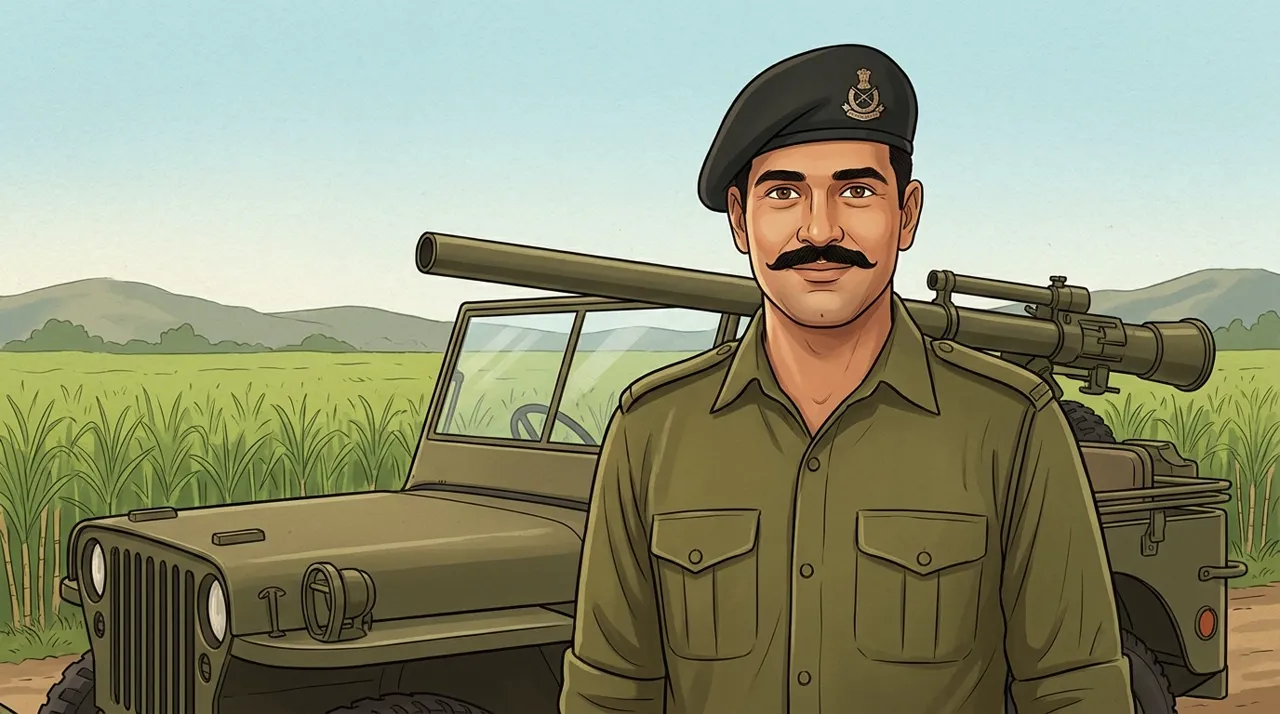
This is the story of Havildar Abdul Hamid, a soldier who stood up to an attack by enemy tanks with a single gun mounted on a jeep.
यह कहानी है हवलदार अब्दुल हमीद की, एक ऐसे सैनिक की, जिन्होंने जीप पर लगी एक तोप के सहारे दुश्मन के टैंकों के हमले का डटकर सामना किया।
Abdul Hamid was born in 1933 in the village of Dhamupur, in Ghazipur district of Uttar Pradesh. His father was a tailor, and as a boy Hamid helped him at the sewing machine. At twenty-one he joined the army, in the Grenadiers regiment.
अब्दुल हमीद का जन्म 1933 में उत्तर प्रदेश के गाज़ीपुर ज़िले के धामूपुर गाँव में हुआ। उनके पिता दर्ज़ी थे, और बचपन में हमीद सिलाई मशीन पर उनका हाथ बँटाते थे। इक्कीस साल की उम्र में वे सेना की ग्रेनेडियर्स रेजिमेंट में भर्ती हुए।
In September 1965, India and Pakistan were at war. In the Khem Karan sector of Punjab, near the village of Asal Uttar, the Pakistani army attacked with Patton tanks, among the most powerful tanks of that time.
सितंबर 1965 में भारत और पाकिस्तान के बीच युद्ध छिड़ गया। पंजाब के खेमकरण सेक्टर में, असल उत्तर गाँव के पास, पाकिस्तानी सेना ने पैटन टैंकों से हमला किया। ये उस समय के सबसे ताकतवर टैंकों में गिने जाते थे।
Hamid commanded a recoilless gun, an anti-tank gun mounted on a jeep. On the morning of the tenth of September, as enemy tanks broke into the Indian positions, he drove out to a flanking position, to the side of the enemy's advance, under heavy shelling, and found a good spot hidden among the fields.
हमीद एक रिकॉइललेस गन के कमांडर थे, यानी जीप पर लगी टैंक-भेदी तोप। दस सितंबर की सुबह, जब दुश्मन के टैंक भारतीय मोर्चों में घुस आए, तो वे भारी गोलाबारी के बीच अपनी जीप लेकर दुश्मन के बगल की ओर निकले, और खेतों के बीच छिपने की एक अच्छी जगह ढूँढ ली।
He took aim, and knocked out the leading tank. Then he quickly changed his position, and set a second tank on fire.
उन्होंने निशाना साधा और सबसे आगे वाले टैंक को नष्ट कर दिया। फिर तुरंत अपनी जगह बदली, और दूसरे टैंक में भी आग लगा दी।
By now the enemy had spotted him. Machine-gun fire and shells rained down around his jeep. Hamid did not leave his gun. He kept firing at yet another tank, until an enemy shell struck him. Havildar Abdul Hamid gave his life on the battlefield.
अब तक दुश्मन ने उन्हें देख लिया था। उनकी जीप के चारों ओर मशीनगन की गोलियाँ और गोले बरसने लगे। पर हमीद अपनी तोप छोड़कर नहीं हटे। वे एक और टैंक पर निशाना साधते रहे, तभी दुश्मन का एक गोला उन्हें आ लगा। हवलदार अब्दुल हमीद युद्धभूमि में वीरगति को प्राप्त हुए।
His courage inspired his comrades to fight back with all their strength, and the tank attack was beaten back. Asal Uttar is remembered as one of the great tank battles of that war.
उनके साहस से उनके साथियों में नया जोश भर गया, और उन्होंने पूरी ताकत से लड़कर टैंकों का हमला नाकाम कर दिया। असल उत्तर की लड़ाई उस युद्ध की बड़ी टैंक लड़ाइयों में गिनी जाती है।
Abdul Hamid was awarded the Param Vir Chakra, and India remembers him as Veer Abdul Hamid. His story shows us that courage does not need big weapons. It needs a calm mind, quick thinking, and a heart that stays at its post.
अब्दुल हमीद को परमवीर चक्र से सम्मानित किया गया, और देश उन्हें वीर अब्दुल हमीद के नाम से याद करता है। उनकी कहानी बताती है कि साहस के लिए बड़े हथियार नहीं चाहिए। चाहिए एक शांत मन, सूझबूझ, और ऐसा दिल जो अपनी जगह पर डटा रहे।
Quick factsमुख्य तथ्य
- Born: 1 July 1933, Dhamupur, Ghazipur district, Uttar Pradeshजन्म: 1 जुलाई 1933, धामूपुर, गाज़ीपुर ज़िला, उत्तर प्रदेश
- Rank and unit: Company Quartermaster Havildar, 4th Battalion, The Grenadiersपद और यूनिट: कंपनी क्वार्टरमास्टर हवलदार, 4 ग्रेनेडियर्स
- Battle: Asal Uttar, Khem Karan sector, Punjab, 10 September 1965लड़ाई: असल उत्तर, खेमकरण सेक्टर, पंजाब, 10 सितंबर 1965
- Age: 32आयु: 32 वर्ष
- Award: Param Vir Chakra (Gazette notification No. 111-Press/65)सम्मान: परमवीर चक्र (गज़ट अधिसूचना संख्या 111-प्रेस/65)
Accounts differ on how many tanks he destroyed over the two days of fighting (9 and 10 September) (figures from three to eight appear). The official citation describes the two tanks he knocked out on 10 September and a third he was firing at; the story follows the citation.दो दिन (9 और 10 सितंबर) की लड़ाई में उन्होंने कितने टैंक नष्ट किए, इस पर विवरण अलग-अलग हैं (तीन से आठ तक के आँकड़े मिलते हैं)। आधिकारिक प्रशस्ति-पत्र 10 सितंबर को नष्ट किए गए दो टैंकों और तीसरे टैंक पर निशाना साधने का वर्णन करता है; कहानी प्रशस्ति-पत्र के अनुसार है।
Official citationआधिकारिक प्रशस्ति-पत्र
At 0800 hours on 10 September 1965 Pakistan forces launched an attack with a regiment of Patton tanks on a vital area ahead of village Cheema on the Bhikkiwind road in the Khem Karan Sector. Intense artillery shelling preceded the attack. The enemy tanks penetrated the forward position by 0900 hours. Realising the grave situation, Company Quartermaster Havildar Abdul Hamid who was commander of a RCL gun detachment moved out to a flanking position with his gun mounted on a jeep, under intense enemy shelling and tank fire. Taking an advantageous position, he knocked out the leading enemy tank and then swiftly changing his position, he sent another tank up in flames. By this time the enemy tanks in the area spotted him and brought his jeep under concentrated machine-gun and high explosive fire. Undeterred, Company Quartermaster Havildar Abdul Hamid kept on firing on yet another enemy tank with his recoilless gun. While doing so, he was mortally wounded by an enemy high explosive shell. Havildar Abdul Hamid's brave action inspired his comrades to put up a gallant fight and to beat back the heavy tank assault by the enemy. His complete disregard for his personal safety during the operation and his sustained acts of bravery in the face of constant enemy fire were a shining example not only to his unit but also to the whole division and were in the highest traditions of the Indian Army.
Gazette of India notification No. 111-Press/65
Worksheetवर्कशीट · Havildar Abdul Hamid · Classes 3 to 5कक्षा 3 से 5
Name / नाम: ____________________Class / कक्षा: ______Date / तारीख़: __________
- What was Abdul Hamid's father's work, and how did young Hamid help him?अब्दुल हमीद के पिता क्या काम करते थे, और बचपन में हमीद उनकी मदद कैसे करते थे?
- What kind of gun did Hamid use, and what was it mounted on?हमीद कौन-सी तोप चलाते थे, और वह किस पर लगी थी?
- Why did he move to a new spot after hitting the first tank?पहले टैंक पर निशाना लगाने के बाद वे नई जगह क्यों चले गए?
Activityगतिविधि
Draw the moment from the story you remember most. Then complete: "My role model is ____. The values I have learnt from his life are ..." (about 150 words)
कहानी का वह पल बनाइए जो आपको सबसे ज़्यादा याद है। फिर पूरा कीजिए: "मेरे आदर्श हैं ____। उनके जीवन से मैंने ये मूल्य सीखे हैं ..." (लगभग 150 शब्द)
Worksheetवर्कशीट · Havildar Abdul Hamid · Classes 6 to 8कक्षा 6 से 8
Name / नाम: ____________________Class / कक्षा: ______Date / तारीख़: __________
- Hamid's small jeep faced big, heavy tanks. What helped him succeed? Think about planning, hiding and timing.हमीद की छोटी-सी जीप का सामना बड़े, भारी टैंकों से था। उनकी सफलता में किन बातों ने मदद की? योजना, छिपने और सही समय के बारे में सोचिए।
- How did one person's courage change the way his whole unit fought? Give an example of this from sports, school or home.एक व्यक्ति के साहस ने उनकी पूरी यूनिट के लड़ने का तरीका कैसे बदल दिया? खेल, स्कूल या घर से ऐसा कोई उदाहरण दीजिए।
- Write a short letter to Abdul Hamid's family, telling them what his courage means to you.अब्दुल हमीद के परिवार को एक छोटा पत्र लिखिए और बताइए कि उनका साहस आपके लिए क्या मायने रखता है।
Activityगतिविधि
Write a paragraph of about 300 words: "My role model is ____. The values I have learnt from his life are ..." or plan a one-minute storytelling video.
लगभग 300 शब्दों का अनुच्छेद लिखिए: "मेरे आदर्श हैं ____। उनके जीवन से मैंने ये मूल्य सीखे हैं ..." या एक मिनट के कहानी-वीडियो की योजना बनाइए।
Worksheetवर्कशीट · Havildar Abdul Hamid · Classes 9 to 12कक्षा 9 से 12
Name / नाम: ____________________Class / कक्षा: ______Date / तारीख़: __________
- Accounts give different numbers of tanks destroyed by Hamid (from three to eight). Compare at least two sources and explain why such differences arise.हमीद द्वारा नष्ट किए गए टैंकों की संख्या अलग-अलग स्रोतों में अलग है (तीन से आठ तक)। कम से कम दो स्रोतों की तुलना कीजिए और समझाइए कि ऐसे अंतर क्यों आते हैं।
- Research the Battle of Asal Uttar. Why did the terrain (fields, canals, flooding) matter for a tank battle?असल उत्तर की लड़ाई के बारे में जानकारी जुटाइए। टैंकों की लड़ाई में ज़मीन (खेत, नहरें, पानी भरना) क्यों मायने रखती थी?
- Abdul Hamid came from a humble background. Write about what his life says about opportunity and service in the Indian Army.अब्दुल हमीद एक साधारण परिवार से थे। उनका जीवन भारतीय सेना में अवसर और सेवा के बारे में क्या बताता है, इस पर लिखिए।
Activityगतिविधि
Write an essay of about 750 words: "____ gave the supreme sacrifice for our nation. If given a chance to keep his memory alive, I would like to ..."
लगभग 750 शब्दों का निबंध लिखिए: "____ ने देश के लिए सर्वोच्च बलिदान दिया। अगर मुझे उनकी याद को जीवित रखने का मौका मिले, तो मैं ..."