Real Heroes of Indiaभारत के असली नायक · Bharat Ratna, 1998; Ramon Magsaysay Award, 1974भारत रत्न, 1998; रेमन मैग्सेसे पुरस्कार, 1974
M. S. Subbulakshmiएम. एस. सुब्बुलक्ष्मी
Madurai, Tamil Nadu, 1916–2004मदुरै, तमिलनाडु, 1916–2004
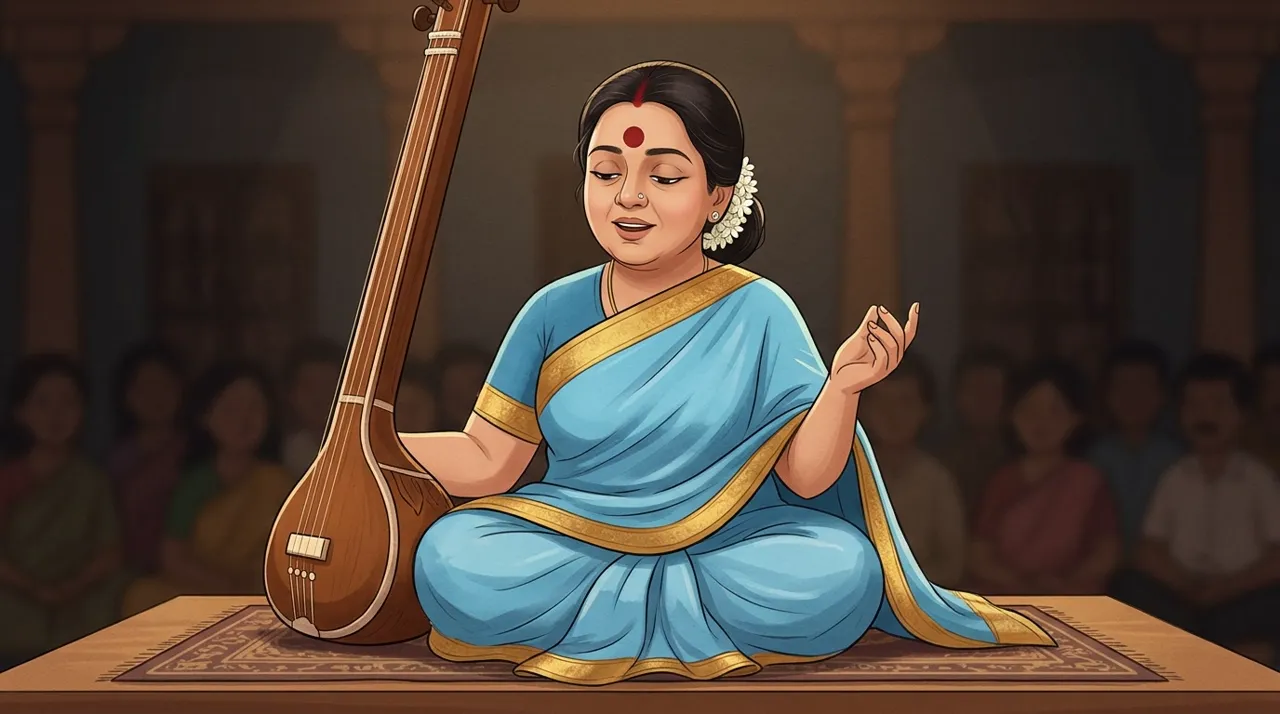
This is the story of M. S. Subbulakshmi, whose voice is still heard in millions of Indian homes. She was the first musician ever to receive the Bharat Ratna, India's highest civilian honour.
यह कहानी है एम. एस. सुब्बुलक्ष्मी की, जिनकी आवाज़ आज भी लाखों भारतीय घरों में गूँजती है। वे भारत रत्न पाने वाली पहली संगीतकार थीं। भारत रत्न देश का सबसे बड़ा नागरिक सम्मान है।
She was born in 1916 in Madurai, into a family of musicians. At home they called her Kunjamma. Her mother, Shanmukhavadivu, was a well-known veena player, and her grandmother played the violin. Little Kunjamma grew up listening, and singing along.
उनका जन्म 1916 में मदुरै में, संगीतकारों के एक परिवार में हुआ। घर में सब उन्हें कुंजम्मा बुलाते थे। उनकी माँ षण्मुखवडिवु एक जानी-मानी वीणा वादक थीं, और नानी वायलिन बजाती थीं। नन्ही कुंजम्मा संगीत सुनते-सुनते और साथ में गाते-गाते बड़ी हुईं।
At about ten, she sang for a gramophone record while her mother played the veena. A year later, she sang in public for the first time, in a temple hall in Tiruchirappalli.
जब वे लगभग दस साल की थीं, तब उन्होंने एक ग्रामोफ़ोन रिकॉर्ड के लिए गाना गाया, और उनकी माँ ने साथ में वीणा बजाई। एक साल बाद उन्होंने पहली बार लोगों के सामने, तिरुचिरापल्ली के एक मंदिर के मंडप में गाया।
At thirteen, she was invited to sing at the Music Academy in Madras. Very few young girls got such a chance. She kept learning from great teachers and practising every day. By seventeen, she was giving full concerts of her own.
तेरह साल की उम्र में उन्हें मद्रास की म्यूज़िक एकेडमी में गाने का न्योता मिला। इतनी कम उम्र की लड़कियों को ऐसा मौक़ा बहुत कम मिलता था। वे बड़े-बड़े गुरुओं से सीखती रहीं और रोज़ अभ्यास करती रहीं। सत्रह साल की होते-होते वे अकेले पूरे-पूरे कार्यक्रम देने लगीं।
She also acted in films. In 1945 she played Meera, the saint-poet who sang for Krishna. The film was later made in Hindi too, and her songs reached homes all over India.
उन्होंने फ़िल्मों में भी काम किया। 1945 में उन्होंने मीरा का किरदार निभाया, वही संत-कवयित्री जो कृष्ण के लिए गाती थीं। बाद में यह फ़िल्म हिंदी में भी बनी, और उनके गाने पूरे भारत के घरों तक पहुँच गए।
Mahatma Gandhi loved her bhajans. For his birthday in 1947, he asked to hear her sing Meera's bhajan "Hari Tum Haro", a prayer to take away people's pain. She recorded it late at night in Madras, and the recording was flown to Delhi in time. A few months later, when Gandhiji died, the radio played her song again and again.
महात्मा गांधी को उनके भजन बहुत पसंद थे। 1947 में अपने जन्मदिन पर उन्होंने उनसे मीरा का भजन "हरि तुम हरो" सुनने की इच्छा जताई। यह लोगों का दुख दूर करने की प्रार्थना है। उन्होंने देर रात मद्रास में इसे रिकॉर्ड किया, और रिकॉर्डिंग हवाई जहाज़ से दिल्ली भेजी गई, ताकि समय पर पहुँच जाए। कुछ महीने बाद, जब गांधीजी नहीं रहे, तो रेडियो पर उनका यह भजन बार-बार बजाया गया।
Her greatest gift was not only her voice. In 1944 she gave five concerts to raise money for a fund in memory of Kasturba Gandhi. After that, she gave much of her earnings to hospitals, schools and orphanages. At some open-air concerts, a ticket cost just four annas, so that anyone could come.
उनका सबसे बड़ा तोहफ़ा सिर्फ़ उनकी आवाज़ नहीं था। 1944 में उन्होंने कस्तूरबा गांधी की याद में बने एक कोष के लिए पैसे जुटाने को पाँच कार्यक्रम दिए। उसके बाद उन्होंने अपने कार्यक्रमों की कमाई का बड़ा हिस्सा अस्पतालों, स्कूलों और अनाथालयों को दे दिया। कुछ खुले मैदान वाले कार्यक्रमों में टिकट सिर्फ़ चार आने का होता था, ताकि कोई भी आ सके।
On 23 October 1966, United Nations Day, she sang in the General Assembly hall in New York, the first Indian to perform there. Among her songs was "Maitreem Bhajata", a Sanskrit prayer asking all people to be friends and give up war.
23 अक्टूबर 1966 को, संयुक्त राष्ट्र दिवस पर, उन्होंने न्यूयॉर्क में संयुक्त राष्ट्र महासभा के विशाल हॉल में गाया। वहाँ गाने वाली वे पहली भारतीय थीं। उनके गीतों में "मैत्रीं भजत" भी था, एक संस्कृत प्रार्थना, जो सब लोगों से दोस्ती से रहने और युद्ध छोड़ने को कहती है।
In 1974 she received the Ramon Magsaysay Award, and in 1998 the Bharat Ratna. She died in Chennai in 2004, aged 88. Her morning prayer songs still play in many homes. Her life reminds us that a gift grows bigger when we share it with others.
1974 में उन्हें रेमन मैग्सेसे पुरस्कार मिला, और 1998 में भारत रत्न। 2004 में, 88 साल की उम्र में, चेन्नई में उनका निधन हो गया। सुबह की उनकी प्रार्थनाएँ आज भी कई घरों में बजती हैं। उनका जीवन हमें याद दिलाता है कि कोई भी हुनर दूसरों के साथ बाँटने से और बड़ा हो जाता है।
Quick factsमुख्य तथ्य
- Born: 16 September 1916, Madurai (then Madras Presidency, now Tamil Nadu); her mother, Shanmukhavadivu, was a well-known veena playerजन्म: 16 सितंबर 1916, मदुरै (तब मद्रास प्रेसीडेंसी, अब तमिलनाडु); उनकी माँ षण्मुखवडिवु एक जानी-मानी वीणा वादक थीं
- First record: 1926, aged about 10, with her mother on the veena; first concert at the Madras Music Academy in 1929, aged 13पहला रिकॉर्ड: 1926, लगभग 10 साल की उम्र में, माँ की वीणा के साथ; 1929 में, 13 साल की उम्र में, मद्रास म्यूज़िक एकेडमी में पहला कार्यक्रम
- Film: title role in Meera (Tamil, 1945; Hindi version, 1947)फ़िल्म: "मीरा" में मुख्य भूमिका (तमिल, 1945; हिंदी रूप, 1947)
- United Nations: sang in the General Assembly hall, New York, on UN Day, 23 October 1966संयुक्त राष्ट्र: 23 अक्टूबर 1966, संयुक्त राष्ट्र दिवस पर, न्यूयॉर्क में महासभा के हॉल में गायन
- Honours: Padma Bhushan 1954, Sangita Kalanidhi 1968, Ramon Magsaysay Award 1974, Padma Vibhushan 1975, Bharat Ratna 1998 (the first musician to receive it)सम्मान: पद्म भूषण 1954, संगीत कलानिधि 1968, रेमन मैग्सेसे पुरस्कार 1974, पद्म विभूषण 1975, भारत रत्न 1998 (यह सम्मान पाने वाली पहली संगीतकार)
- Died: 11 December 2004, Chennai, aged 88निधन: 11 दिसंबर 2004, चेन्नई, 88 वर्ष की आयु में
Sources differ on her first public performance: the story follows the account of a temple hall in Tiruchirappalli in 1927, when she was about eleven, and her Music Academy concert in 1929; some write-ups call 1929 her first performance. The first record is dated 1926, at about ten, in several sources (one names the song as "Maragatha Vadivum"). Two famous quotes are kept out of the story because their exact words are not recorded: Nehru is said to have called himself "a mere Prime Minister" before "a Queen of Song" (biographer T. J. S. George says he first said it at a charity concert in Delhi in 1949 and repeated it later, but the wording varies from "Queen of Song" to "Queen of Music"), and Gandhi is said to have replied, when she said she did not know "Hari Tum Haro", that he would rather hear her speak the words than hear someone else sing them. Accounts of the 1947 recording also differ in small details (who set the tune, who carried the tape to Delhi). The UN concert is usually dated 23 October 1966; one UN archive caption mentions 24 October. Her mother came from the devadasi tradition of temple musicians, a community that faced social prejudice; biographers discuss this and other family matters, but the story speaks only of her musical family. The charity figures (more than 200 concerts, over one crore rupees, or over a million US dollars) are estimates.उनके पहले सार्वजनिक कार्यक्रम के बारे में स्रोत अलग-अलग बातें कहते हैं: कहानी उस विवरण पर चलती है जिसमें 1927 में, लगभग ग्यारह साल की उम्र में, तिरुचिरापल्ली के एक मंदिर के मंडप में गाना और 1929 में म्यूज़िक एकेडमी का कार्यक्रम है; कुछ लेख 1929 को ही उनका पहला कार्यक्रम बताते हैं। कई स्रोतों में पहला रिकॉर्ड 1926 का, लगभग दस साल की उम्र का बताया गया है (एक में गीत का नाम "मरगत वडिवुम" है)। दो मशहूर कथन कहानी में नहीं रखे गए, क्योंकि उनके ठीक-ठीक शब्द दर्ज नहीं हैं: कहा जाता है कि नेहरू ने ख़ुद को "गान की रानी" के सामने "एक मामूली प्रधानमंत्री" कहा (जीवनी-लेखक टी. जे. एस. जॉर्ज के अनुसार उन्होंने यह पहली बार 1949 में दिल्ली के एक धर्मार्थ कार्यक्रम में कहा और बाद में दोहराया, पर शब्द कहीं "गान की रानी" तो कहीं "संगीत की रानी" हैं); और कहा जाता है कि जब उन्होंने बताया कि उन्हें "हरि तुम हरो" नहीं आता, तो गांधीजी ने जवाब दिया कि किसी और के गाने से अच्छा वे उनके मुँह से इसके शब्द बोलते हुए सुनना चाहेंगे। 1947 की रिकॉर्डिंग के छोटे ब्योरे भी अलग-अलग हैं (धुन किसने बनाई, टेप दिल्ली कौन ले गया)। संयुक्त राष्ट्र का कार्यक्रम आम तौर पर 23 अक्टूबर 1966 का बताया जाता है; संयुक्त राष्ट्र के एक अभिलेख में 24 अक्टूबर लिखा है। उनकी माँ देवदासी परंपरा से थीं, यानी मंदिरों के संगीतकारों का वह समुदाय जिसे समाज में भेदभाव झेलना पड़ा; जीवनी-लेखक इस पर और परिवार की दूसरी बातों पर लिखते हैं, पर कहानी सिर्फ़ उनके संगीत वाले परिवार की बात करती है। दान के आँकड़े (200 से ज़्यादा कार्यक्रम, एक करोड़ रुपये से ज़्यादा, या दस लाख अमेरिकी डॉलर से ज़्यादा) अनुमान हैं।
Worksheetवर्कशीट · M. S. Subbulakshmi · Classes 3 to 5कक्षा 3 से 5
Name / नाम: ____________________Class / कक्षा: ______Date / तारीख़: __________
- Who was Subbulakshmi's first music teacher? What instrument did she play?सुब्बुलक्ष्मी की पहली संगीत गुरु कौन थीं? वे कौन-सा वाद्य बजाती थीं?
- Which song did Gandhiji want to hear for his birthday? How did it reach him in Delhi?गांधीजी अपने जन्मदिन पर कौन-सा भजन सुनना चाहते थे? वह दिल्ली में उन तक कैसे पहुँचा?
- Why were some of her concert tickets so cheap? How do you think the people who came felt?उनके कुछ कार्यक्रमों के टिकट इतने सस्ते क्यों होते थे? आपके विचार से वहाँ आने वाले लोगों को कैसा लगा होगा?
Activityगतिविधि
Draw the moment from the story you remember most. Then complete: "My role model is ____. The values I have learnt from their life are ..." (about 150 words)
कहानी का वह पल बनाइए जो आपको सबसे ज़्यादा याद है। फिर पूरा कीजिए: "मेरे आदर्श हैं ____। उनके जीवन से मैंने ये मूल्य सीखे हैं ..." (लगभग 150 शब्द)
Worksheetवर्कशीट · M. S. Subbulakshmi · Classes 6 to 8कक्षा 6 से 8
Name / नाम: ____________________Class / कक्षा: ______Date / तारीख़: __________
- Subbulakshmi was famous, yet she gave much of her earnings away. Why do you think she did this? What else could a famous person do to help others?सुब्बुलक्ष्मी मशहूर थीं, फिर भी उन्होंने अपनी कमाई का बड़ा हिस्सा दान कर दिया। आपके विचार से उन्होंने ऐसा क्यों किया? कोई मशहूर व्यक्ति दूसरों की मदद के लिए और क्या कर सकता है?
- At the United Nations she sang a prayer about friendship and giving up war. Why might a song reach people when a speech cannot?संयुक्त राष्ट्र में उन्होंने दोस्ती और युद्ध छोड़ने की प्रार्थना गाई। ऐसा क्यों हो सकता है कि कोई गीत लोगों के दिल तक पहुँच जाए, जहाँ भाषण नहीं पहुँच पाता?
- Listen to a recording of a classical or devotional song with your family. Write a short paragraph about how it made you feel, and draw the picture it brought to your mind.अपने परिवार के साथ किसी शास्त्रीय या भक्ति गीत की रिकॉर्डिंग सुनिए। एक छोटा अनुच्छेद लिखिए कि उसे सुनकर आपको कैसा लगा, और उससे आपके मन में जो तस्वीर बनी, उसका चित्र बनाइए।
Activityगतिविधि
Write a paragraph of about 300 words: "My role model is ____. The values I have learnt from their life are ..." or plan a one-minute storytelling video.
लगभग 300 शब्दों का अनुच्छेद लिखिए: "मेरे आदर्श हैं ____। उनके जीवन से मैंने ये मूल्य सीखे हैं ..." या एक मिनट के कहानी-वीडियो की योजना बनाइए।
Worksheetवर्कशीट · M. S. Subbulakshmi · Classes 9 to 12कक्षा 9 से 12
Name / नाम: ____________________Class / कक्षा: ______Date / तारीख़: __________
- Nehru is often quoted as calling himself "a mere Prime Minister" before her, but the exact words vary between sources. How should a writer handle a famous quote that cannot be checked?नेहरू के बारे में अक्सर कहा जाता है कि उन्होंने उनके सामने ख़ुद को "एक मामूली प्रधानमंत्री" कहा, पर स्रोतों में शब्द अलग-अलग हैं। किसी ऐसे मशहूर कथन को, जिसकी जाँच न हो सके, एक लेखक को कैसे लिखना चाहिए?
- In the 1920s and 1930s, very few women performed on the classical concert stage. What barriers did women musicians face then, and how did singers like her change the stage for those who came after?1920 और 1930 के दशक में बहुत कम महिलाएँ शास्त्रीय संगीत के मंच पर गाती थीं। उस समय महिला संगीतकारों के सामने कौन-सी रुकावटें थीं, और उनके जैसी गायिकाओं ने आने वाली पीढ़ियों के लिए मंच को कैसे बदला?
- Gramophone records, radio and films carried her voice to people who could never attend a concert. Compare this with how music spreads today through the internet. What is gained and what is lost?ग्रामोफ़ोन रिकॉर्ड, रेडियो और फ़िल्मों ने उनकी आवाज़ उन लोगों तक पहुँचाई जो कभी कोई कार्यक्रम देखने नहीं जा सकते थे। इसकी तुलना आज इंटरनेट से संगीत के फैलने से कीजिए। इससे क्या मिलता है, और क्या खो जाता है?
Activityगतिविधि
Write an essay of about 750 words: "____ changed the lives of many people. If given a chance to carry their work forward, I would like to ..."
लगभग 750 शब्दों का निबंध लिखिए: "____ ने बहुत से लोगों का जीवन बदला। अगर मुझे उनके काम को आगे बढ़ाने का मौका मिले, तो मैं ..."