Real Heroes of Indiaभारत के असली नायक · "Mountain Man"; India Post stamp, 2016"माउंटेन मैन" (पर्वत पुरुष); भारतीय डाक टिकट, 2016
Dashrath Manjhiदशरथ मांझी
Gehlaur, Bihar, 1960–1982गहलौर, बिहार, 1960–1982
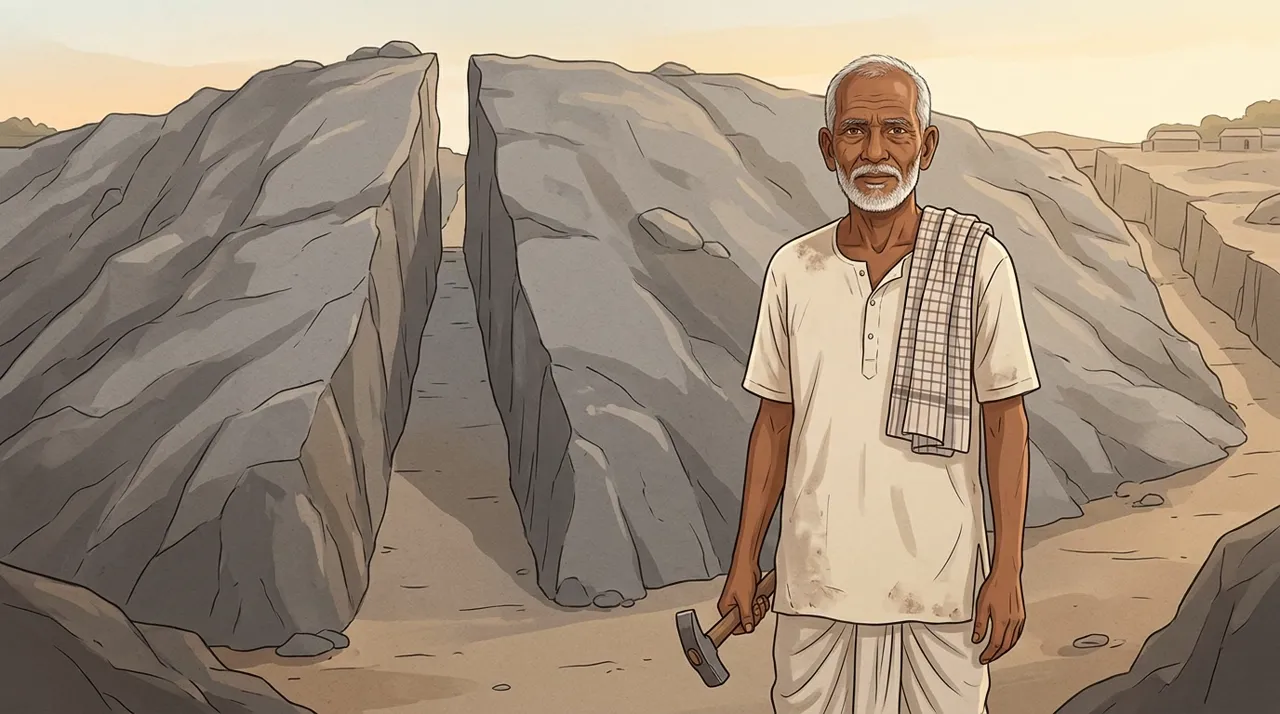
This is the story of Dashrath Manjhi, a poor labourer from Bihar who spent about twenty-two years cutting a road through a rocky hill with only a hammer and a chisel. People call him the Mountain Man.
यह कहानी है दशरथ मांझी की, बिहार के उस ग़रीब मज़दूर की, जिन्होंने सिर्फ़ एक हथौड़ी और छेनी से, लगभग बाईस साल तक, एक पथरीली पहाड़ी काटकर रास्ता बना दिया। लोग उन्हें 'माउंटेन मैन', यानी पर्वत पुरुष, कहते हैं।
Dashrath was born around 1934 in Gehlaur, a village near Gaya, into the Musahar community, one of the poorest in Bihar. Families like his owned no land and were often treated unfairly because of caste. He never went to school, and worked in other people's fields.
दशरथ का जन्म लगभग 1934 में गया के पास गहलौर गाँव में, मुसहर समुदाय में हुआ, जो बिहार के सबसे ग़रीब समुदायों में से एक है। ऐसे परिवारों के पास अपनी ज़मीन नहीं होती थी, और जाति के कारण अक्सर उनके साथ भेदभाव होता था। दशरथ कभी स्कूल नहीं जा पाए, और दूसरों के खेतों में कड़ी मेहनत करते थे।
Next to Gehlaur stood a long, rocky hill. The town of Wazirganj, with its market and doctors, lay beyond it. To get there, people climbed a narrow, dangerous path over the rocks, or walked a long way around.
गहलौर के पास एक लंबी, पथरीली पहाड़ी खड़ी थी। वज़ीरगंज कस्बा, जहाँ बाज़ार और डॉक्टर थे, उसके पार था। वहाँ पहुँचने के लिए लोग पत्थरों के ऊपर से एक पतला, ख़तरनाक रास्ता चढ़ते थे, या बहुत लंबा चक्कर लगाकर जाते थे।
One day, his wife Falguni was crossing the hill to bring him food and water. She slipped on the rocks and was badly hurt, and help was far away. That night, Dashrath made up his mind: he would cut a way through the hill, so no one else would suffer like this.
एक दिन उनकी पत्नी फगुनी उनके लिए खाना और पानी लेकर पहाड़ी पार कर रही थीं। पत्थरों पर उनका पैर फिसला और उन्हें गहरी चोट लगी, और मदद बहुत दूर थी। उसी रात दशरथ ने ठान लिया कि वे पहाड़ी को काटकर रास्ता बनाएँगे, ताकि किसी और को ऐसा दुख न सहना पड़े।
The next morning, he picked up a hammer and a chisel and began to strike the rock. Years later he remembered, "The villagers called me a madman." But through summer heat and winter cold, he kept breaking the hill, one small piece at a time.
अगली सुबह उन्होंने हथौड़ी और छेनी उठाई और चट्टान पर चोट करनी शुरू कर दी। बरसों बाद उन्होंने याद किया, "गाँव वाले मुझे पागल कहते थे।" लेकिन गर्मी की धूप हो या सर्दी की ठंड, वे पहाड़ी को एक-एक छोटा टुकड़ा तोड़ते रहे।
Slowly, the gap grew, and some villagers began to help with food and tools. Sadly, Falguni did not live to see it finished. By 1982, Dashrath had cut a way about 110 metres long, wide enough for carts. A trip of about 55 kilometres to Wazirganj became about 15.
धीरे-धीरे रास्ता खुलता गया, और कुछ गाँव वाले भी खाने और औज़ारों में मदद करने लगे। दुख की बात है कि फगुनी यह रास्ता पूरा होते नहीं देख पाईं। 1982 तक दशरथ ने लगभग 110 मीटर लंबा रास्ता काट दिया, इतना चौड़ा कि बैलगाड़ी निकल सके। वज़ीरगंज तक का लगभग 55 किलोमीटर का सफ़र अब लगभग 15 किलोमीटर रह गया।
He also wanted a proper road, a school and a hospital for his village. Too poor to buy a train ticket, he walked to Delhi along the railway line, asking station masters to sign his diary.
वे अपने गाँव के लिए एक पक्की सड़क, एक स्कूल और एक अस्पताल भी चाहते थे। उनके पास रेल के टिकट के पैसे नहीं थे, इसलिए वे रेल की पटरी के किनारे-किनारे पैदल ही दिल्ली तक गए, और रास्ते में स्टेशन मास्टरों से अपनी डायरी पर दस्तख़त करवाते गए।
All his life, he kept asking for help for his people. When he died in 2007, Bihar gave him a state funeral. Proper roads later ran through his pass, and in 2016 India Post issued a stamp in his honour.
पूरी ज़िंदगी वे अपने लोगों के लिए मदद माँगते रहे। 2007 में उनका निधन हुआ, तो बिहार सरकार ने राजकीय सम्मान के साथ उनका अंतिम संस्कार किया। बाद में उनके बनाए रास्ते से होकर पक्की सड़कें बनीं, और 2016 में भारतीय डाक ने उनके सम्मान में डाक टिकट जारी किया।
Dashrath Manjhi had no money, no machines and no power, but he had patience and a big heart. His story teaches us that when one determined person works for others, even a mountain can make way.
दशरथ मांझी के पास न पैसा था, न मशीनें, न कोई ताक़त, लेकिन उनके पास धीरज था और बड़ा दिल था। उनकी कहानी हमें सिखाती है कि जब एक इंसान पक्के इरादे से दूसरों के लिए काम करता है, तो पहाड़ भी रास्ता दे देता है।
Quick factsमुख्य तथ्य
- Born: about 1934 (often given as 14 January 1934), Gehlaur, Gaya district, Biharजन्म: लगभग 1934 (अक्सर 14 जनवरी 1934 बताया जाता है), गहलौर, गया ज़िला, बिहार
- Work: cut a path through the Gehlaur hill by hand, about 1960 to 1982काम: लगभग 1960 से 1982 तक हाथ से गहलौर पहाड़ी काटकर रास्ता बनाया
- The path: about 110 metres (360 feet) long and about 9 metres (30 feet) wideरास्ता: लगभग 110 मीटर (360 फ़ुट) लंबा और लगभग 9 मीटर (30 फ़ुट) चौड़ा
- Result: the trip between the Atri and Wazirganj blocks fell from about 55 km to about 15 kmनतीजा: अतरी और वज़ीरगंज प्रखंडों के बीच का सफ़र लगभग 55 किलोमीटर से घटकर लगभग 15 किलोमीटर रह गया
- Died: 17 August 2007, AIIMS, New Delhi, aged about 73; given a state funeral by the Bihar governmentनिधन: 17 अगस्त 2007, एम्स, नई दिल्ली, लगभग 73 वर्ष की आयु में; बिहार सरकार ने राजकीय सम्मान के साथ अंतिम संस्कार किया
- Honour: postage stamp by India Post, "Personalities of Bihar" series, 26 December 2016सम्मान: भारतीय डाक का डाक टिकट, "बिहार की विभूतियाँ" श्रृंखला, 26 दिसंबर 2016
Accounts differ a lot. Years: most sources, including the Indian Express (2012) and Wikipedia, say about 22 years (1960–1982); India Post's 2016 brochure says both 22 and 23 years; a 1997 Indian Express interview says 25 years. The story follows 22 years. Size of the path: India Post gives 360 ft long, 30 ft wide and 25 ft high (about 110 m by 9.1 m by 7.6 m); the 1997 interview says 360 ft long, 25 ft high and 16 ft wide. The story gives only the length. Distance saved: most sources say from about 55 km to about 15 km; others say 50 km to 8 km (1997) or 55 km to 12 km. The story follows 55 to 15. His wife: her name is written Falguni, Phaguni or Phalguni Devi. Most accounts agree she was hurt crossing the ridge with his food or water, but they disagree about her death: some say she died soon after because the nearest doctor was too far away (in 1959 or 1960), one says she died on the way to hospital, and villagers interviewed by SabrangIndia say she lived on for some years. The earliest interview (1997) says only that she died before the path was finished. The story therefore says she was badly hurt and did not live to see the path completed. Birth year is usually 1934, but some sources say 1929; his birthplace is also given as Bansi Bigaha in Gehlaur panchayat. The walk to Delhi is placed in the early 1980s by some and was still being reported in 1997 by others, and sources give different aims (meeting the Prime Minister, roads, schools and health, recognition); the story keeps to what most agree on. A 2006 recommendation for the Padma Shri is reported, but he never received a national award.इनके बारे में विवरण बहुत अलग-अलग हैं। साल: इंडियन एक्सप्रेस (2012) और विकिपीडिया समेत ज़्यादातर स्रोत लगभग 22 साल (1960–1982) बताते हैं; भारतीय डाक की 2016 की पुस्तिका में 22 और 23, दोनों साल लिखे हैं; 1997 के इंडियन एक्सप्रेस के एक इंटरव्यू में 25 साल बताए गए हैं। कहानी में 22 साल लिए गए हैं। रास्ते का आकार: भारतीय डाक के अनुसार 360 फ़ुट लंबा, 30 फ़ुट चौड़ा और 25 फ़ुट ऊँचा (लगभग 110 मीटर, 9.1 मीटर और 7.6 मीटर); 1997 के इंटरव्यू में 360 फ़ुट लंबा, 25 फ़ुट ऊँचा और 16 फ़ुट चौड़ा। कहानी में सिर्फ़ लंबाई दी गई है। दूरी: ज़्यादातर स्रोत लगभग 55 किलोमीटर से घटकर लगभग 15 किलोमीटर बताते हैं; कुछ 50 से 8 किलोमीटर (1997) या 55 से 12 किलोमीटर बताते हैं। कहानी 55 से 15 वाली बात मानती है। उनकी पत्नी: नाम फगुनी, फाल्गुनी या फलगुनी देवी लिखा मिलता है। ज़्यादातर स्रोत मानते हैं कि वे खाना या पानी लेकर पहाड़ी पार करते समय घायल हुईं, पर उनकी मृत्यु के बारे में मतभेद है: कुछ कहते हैं कि डॉक्टर बहुत दूर होने के कारण वे जल्द ही चल बसीं (1959 या 1960 में), एक स्रोत कहता है कि अस्पताल ले जाते समय रास्ते में उनकी मृत्यु हुई, और सबरंग इंडिया से बात करने वाले गाँव वालों के अनुसार वे कुछ साल और जीवित रहीं। सबसे पुराने इंटरव्यू (1997) में सिर्फ़ इतना है कि रास्ता पूरा होने से पहले उनकी मृत्यु हो गई। इसलिए कहानी में बस यह कहा गया है कि उन्हें गहरी चोट लगी और वे रास्ता पूरा होते नहीं देख पाईं। जन्म का साल आमतौर पर 1934 बताया जाता है, पर कुछ स्रोत 1929 कहते हैं; जन्मस्थान गहलौर पंचायत का बंसी बिगहा गाँव भी बताया जाता है। दिल्ली की पैदल यात्रा को कुछ स्रोत 1980 के दशक की शुरुआत में बताते हैं, और 1997 की ख़बर में भी उनके दिल्ली जाने का ज़िक्र है; यात्रा का मक़सद भी अलग-अलग बताया गया है (प्रधानमंत्री से मिलना, सड़क, स्कूल और अस्पताल, या पहचान)। कहानी में वही बातें रखी गई हैं जिन पर ज़्यादातर स्रोत सहमत हैं। 2006 में पद्मश्री के लिए उनके नाम की सिफ़ारिश की ख़बर है, पर उन्हें कोई राष्ट्रीय सम्मान नहीं मिला।
Worksheetवर्कशीट · Dashrath Manjhi · Classes 3 to 5कक्षा 3 से 5
Name / नाम: ____________________Class / कक्षा: ______Date / तारीख़: __________
- What tools did Dashrath use to cut through the hill?दशरथ ने पहाड़ी काटने के लिए कौन-से औज़ार इस्तेमाल किए?
- Why did Dashrath decide to cut a path through the hill?दशरथ ने पहाड़ी काटकर रास्ता बनाने का फ़ैसला क्यों किया?
- People laughed at him and called him mad. How do you think he felt? What did he do?लोग उन पर हँसे और उन्हें पागल कहा। आपके विचार से उन्हें कैसा लगा होगा? उन्होंने क्या किया?
Activityगतिविधि
Draw the moment from the story you remember most. Then complete: "My role model is ____. The values I have learnt from their life are ..." (about 150 words)
कहानी का वह पल बनाइए जो आपको सबसे ज़्यादा याद है। फिर पूरा कीजिए: "मेरे आदर्श हैं ____। उनके जीवन से मैंने ये मूल्य सीखे हैं ..." (लगभग 150 शब्द)
Worksheetवर्कशीट · Dashrath Manjhi · Classes 6 to 8कक्षा 6 से 8
Name / नाम: ____________________Class / कक्षा: ______Date / तारीख़: __________
- Dashrath's path did not help him much, because his wife had already been hurt. Who did it help? Why do you think he kept going for so many years?दशरथ के रास्ते से ख़ुद उन्हें ज़्यादा फ़ायदा नहीं हुआ, क्योंकि उनकी पत्नी को चोट लग चुकी थी। फिर इससे किसे फ़ायदा हुआ? आपके विचार से वे इतने साल तक काम में क्यों लगे रहे?
- A trip of about 55 km became about 15 km. Work out how much shorter it became. How would this change life for a sick person, a farmer or a child going to school?लगभग 55 किलोमीटर का सफ़र लगभग 15 किलोमीटर रह गया। हिसाब लगाइए कि रास्ता कितना छोटा हुआ। इससे किसी बीमार व्यक्ति, किसान या स्कूल जाने वाले बच्चे की ज़िंदगी कैसे बदली होगी?
- Imagine you are a villager in Gehlaur in 1982, walking through the new path for the first time. Write a short diary entry about that day.कल्पना कीजिए कि आप 1982 में गहलौर के एक गाँव वाले हैं और पहली बार नए रास्ते से गुज़र रहे हैं। उस दिन के बारे में एक छोटी डायरी लिखिए।
Activityगतिविधि
Write a paragraph of about 300 words: "My role model is ____. The values I have learnt from their life are ..." or plan a one-minute storytelling video.
लगभग 300 शब्दों का अनुच्छेद लिखिए: "मेरे आदर्श हैं ____। उनके जीवन से मैंने ये मूल्य सीखे हैं ..." या एक मिनट के कहानी-वीडियो की योजना बनाइए।
Worksheetवर्कशीट · Dashrath Manjhi · Classes 9 to 12कक्षा 9 से 12
Name / नाम: ____________________Class / कक्षा: ______Date / तारीख़: __________
- Sources give the work as 22, 23 or 25 years, and the distance saved in several ways. Compare the 1997 interview with later reports. Why might numbers grow or change as a story is retold?स्रोतों में काम के साल 22, 23 या 25 बताए गए हैं, और बची हुई दूरी भी अलग-अलग बताई गई है। 1997 के इंटरव्यू की तुलना बाद की ख़बरों से कीजिए। जब कोई कहानी बार-बार सुनाई जाती है, तो उसके आँकड़े क्यों बढ़ या बदल सकते हैं?
- Dashrath belonged to the Musahar community, one of Bihar's poorest. How might caste and poverty have shaped both his hardships and the way people first reacted to his work?दशरथ मुसहर समुदाय से थे, जो बिहार के सबसे ग़रीब समुदायों में से एक है। जाति और ग़रीबी ने उनकी मुश्किलों को, और उनके काम पर लोगों की शुरुआती प्रतिक्रिया को, कैसे प्रभावित किया होगा?
- A single man cut the path, but proper roads through it were built only after his death, and a hospital in his name was planned later still. What does his story say about the role of ordinary citizens and the role of government in development?रास्ता एक अकेले इंसान ने काटा, लेकिन उससे होकर पक्की सड़कें उनकी मृत्यु के बाद ही बनीं, और उनके नाम पर अस्पताल की योजना उससे भी बाद में आई। विकास में आम नागरिकों और सरकार की भूमिका के बारे में उनकी कहानी क्या बताती है?
Activityगतिविधि
Write an essay of about 750 words: "____ changed the lives of many people. If given a chance to carry their work forward, I would like to ..."
लगभग 750 शब्दों का निबंध लिखिए: "____ ने बहुत से लोगों का जीवन बदला। अगर मुझे उनके काम को आगे बढ़ाने का मौका मिले, तो मैं ..."