Real Heroes of Indiaभारत के असली नायक · Bharat Ratna (posthumous), 1990; chaired the committee that drafted the Constitution of Indiaभारत रत्न (मरणोपरांत), 1990; भारत का संविधान बनाने वाली मसौदा समिति के अध्यक्ष
Dr B. R. Ambedkarडॉ. भीमराव आंबेडकर
Mhow, Bombay and New Delhi, 1891–1956महू, बंबई और नई दिल्ली, 1891–1956
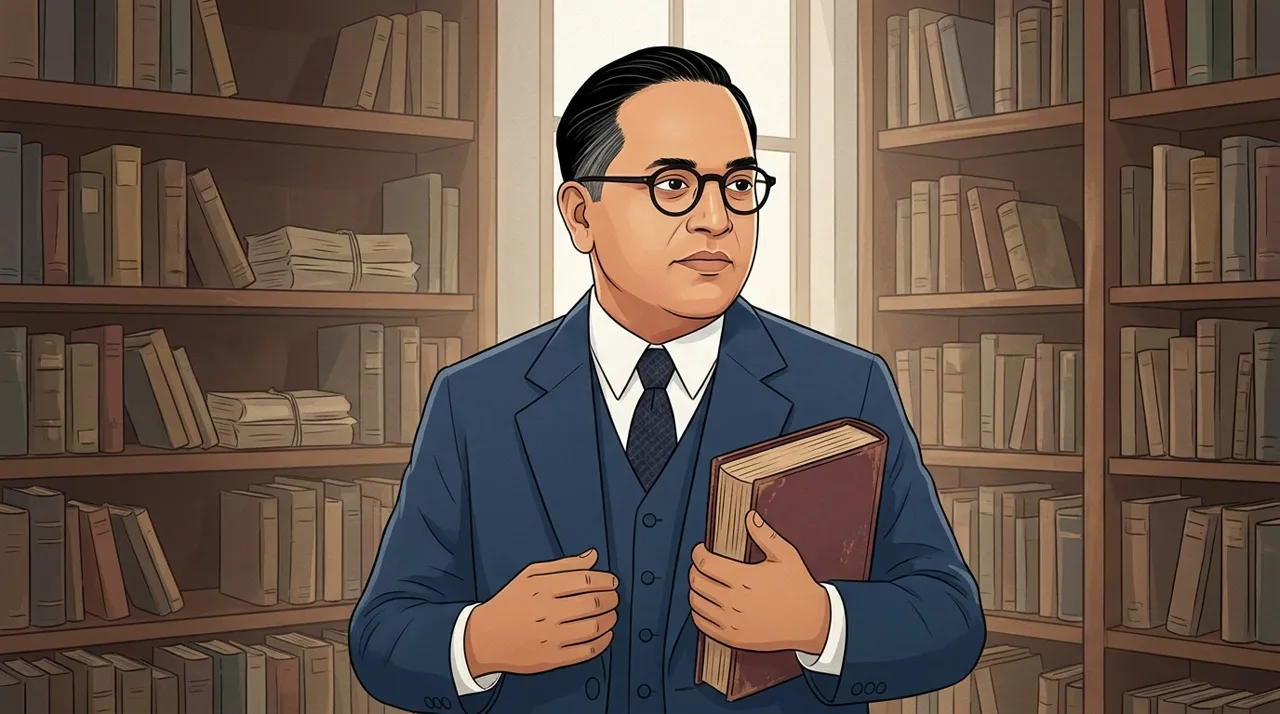
This is the story of Dr Bhimrao Ambedkar, lovingly called Babasaheb. Treated as an "untouchable" as a child, he grew up to lead the drafting of India's Constitution, which says every Indian is equal.
यह कहानी है डॉ. भीमराव आंबेडकर की, जिन्हें प्यार से बाबासाहेब कहा जाता है। बचपन में उनके साथ "अछूत" जैसा बर्ताव हुआ, पर बड़े होकर उन्होंने भारत के संविधान का मसौदा बनाने के काम की अगुवाई की, जो कहता है कि हर भारतीय बराबर है।
Bhimrao was born in 1891 in Mhow, into a family unfairly treated as "untouchable". At school in Satara, he sat apart on a piece of sacking he carried from home. He was not allowed to touch the school tap; only if the school peon opened it could he drink. He later wrote: "No peon, no water."
भीमराव का जन्म 1891 में महू में ऐसे परिवार में हुआ, जिसे उस समय अन्याय से "अछूत" माना जाता था। सातारा के स्कूल में वे सबसे अलग, टाट के एक टुकड़े पर बैठते थे, जिसे वे घर से लाते थे। उन्हें स्कूल का नल छूने की इजाज़त नहीं थी; स्कूल का चपरासी नल खोल देता, तभी वे पानी पी पाते। बाद में उन्होंने लिखा: "चपरासी नहीं, तो पानी नहीं।"
At about nine, Bhimrao travelled with his elder brother and a nephew to see their father. Once cart drivers learned the boys' caste, none would carry them, and that night no one would give them water. They slept hungry and thirsty. He never forgot it.
लगभग नौ साल की उम्र में भीमराव अपने बड़े भाई और एक भांजे के साथ पिता से मिलने निकले। जब गाड़ीवानों को बच्चों की जाति पता चली, तो कोई उन्हें ले जाने को तैयार नहीं हुआ, और उस रात किसी ने उन्हें पानी तक नहीं दिया। वे भूखे-प्यासे सो गए। भीमराव यह कभी नहीं भूले।
Bhimrao believed education could open closed doors. After Elphinstone College in Bombay, a scholarship from the Maharaja of Baroda took him to Columbia University in New York. Later he studied at the London School of Economics too. He earned doctorates from both, and became a lawyer.
भीमराव मानते थे कि शिक्षा बंद दरवाज़े खोल सकती है। बंबई के एल्फ़िंस्टन कॉलेज के बाद, बड़ौदा के महाराजा की छात्रवृत्ति पर वे न्यूयॉर्क के कोलंबिया विश्वविद्यालय गए। बाद में उन्होंने लंदन स्कूल ऑफ़ इकोनॉमिक्स में भी पढ़ाई की। दोनों जगह से उन्होंने डॉक्टरेट की उपाधि पाई, और वकील भी बने।
Back home, he still faced unfairness; in Baroda, he was made to leave the inn where he stayed, and no one would give him a room. Babasaheb decided that escaping unfairness himself was not enough. He would work to end it for everyone.
देश लौटने पर भी उनके साथ भेदभाव होता रहा; बड़ौदा में जिस सराय में वे ठहरे थे, वहाँ से उन्हें निकलना पड़ा, और कोई उन्हें कमरा देने को तैयार नहीं हुआ। बाबासाहेब ने तय किया कि सिर्फ़ ख़ुद अन्याय से बच निकलना काफ़ी नहीं है। वे सबके लिए इसे ख़त्म करने का काम करेंगे।
In Mahad, the Chavdar tank had been declared open to all, yet "untouchable" families were kept away. On 20 March 1927, Babasaheb peacefully led thousands to the tank and drank its water. Others followed. After ten years of court cases, the High Court agreed in 1937: the tank was open to all.
महाड का चवदार तालाब सबके लिए खुला घोषित हो चुका था, फिर भी "अछूत" माने जाने वाले परिवारों को उससे दूर रखा जाता था। 20 मार्च 1927 को बाबासाहेब हज़ारों लोगों के साथ शांति से तालाब पर पहुँचे और उसका पानी पिया। बाक़ी लोगों ने भी पिया। लगभग दस साल चले मुक़दमे के बाद 1937 में हाई कोर्ट ने भी माना कि तालाब सबके लिए खुला है।
When India became free in 1947, Babasaheb became the first Law Minister and chairman of the committee that drafted the Constitution. Month after month, he explained and defended the draft in the Constituent Assembly. Adopted on 26 November 1949, the Constitution promises equality before the law and ends untouchability.
1947 में भारत आज़ाद हुआ, तो बाबासाहेब देश के पहले क़ानून मंत्री बने, और संविधान का मसौदा बनाने वाली समिति के अध्यक्ष भी। महीनों तक वे संविधान सभा में मसौदे को समझाते रहे और उसके पक्ष में तर्क देते रहे। 26 नवंबर 1949 को अपनाया गया संविधान क़ानून के सामने सबको बराबरी का वचन देता है, और छुआछूत को ख़त्म करता है।
Babasaheb worked all his life for the poor, for workers and for women. In October 1956 he embraced Buddhism, and on 6 December that year he died in his sleep in Delhi. In 1990 he was given the Bharat Ratna, India's highest civilian award.
बाबासाहेब जीवन भर ग़रीबों, मज़दूरों और महिलाओं के लिए काम करते रहे। अक्टूबर 1956 में उन्होंने बौद्ध धर्म अपनाया, और उसी साल 6 दिसंबर को दिल्ली में नींद में ही उनका निधन हो गया। 1990 में उन्हें भारत के सबसे बड़े नागरिक सम्मान, भारत रत्न से सम्मानित किया गया।
Today, India remembers him on 14 April, Ambedkar Jayanti, and on 26 November, Constitution Day. Whenever children of every background sit together and share the same tap, they live the promise Babasaheb fought for.
आज भारत उन्हें 14 अप्रैल को आंबेडकर जयंती पर, और 26 नवंबर को संविधान दिवस पर याद करता है। जब भी हर तरह के परिवारों से आए बच्चे साथ बैठते हैं और एक ही नल से पानी पीते हैं, तो वे उसी वचन को जीते हैं, जिसके लिए बाबासाहेब ने संघर्ष किया।
Quick factsमुख्य तथ्य
- Born: 14 April 1891, Mhow (now Dr Ambedkar Nagar, Madhya Pradesh)जन्म: 14 अप्रैल 1891, महू (अब डॉ. आंबेडकर नगर, मध्य प्रदेश)
- Studied: Elphinstone College, Bombay (BA, 1912); Columbia University, New York (MA 1915, PhD 1927); London School of Economics (DSc, 1923); trained as a barrister at Gray's Inn, Londonपढ़ाई: एल्फ़िंस्टन कॉलेज, बंबई (बी.ए., 1912); कोलंबिया विश्वविद्यालय, न्यूयॉर्क (एम.ए. 1915, पीएच.डी. 1927); लंदन स्कूल ऑफ़ इकोनॉमिक्स (डी.एससी., 1923); लंदन के ग्रेज़ इन से बैरिस्टर की पढ़ाई
- Mahad Satyagraha: 20 March 1927, at the Chavdar tank in Mahad (now Raigad district, Maharashtra)महाड सत्याग्रह: 20 मार्च 1927, महाड के चवदार तालाब पर (अब रायगढ़ ज़िला, महाराष्ट्र)
- Chairman of the Drafting Committee of the Constitution from August 1947; Constitution adopted 26 November 1949अगस्त 1947 से संविधान की मसौदा समिति के अध्यक्ष; संविधान 26 नवंबर 1949 को अपनाया गया
- First Law Minister of independent India, 1947–1951आज़ाद भारत के पहले क़ानून मंत्री, 1947–1951
- Died: 6 December 1956, Delhi, aged 65; Bharat Ratna awarded in 1990निधन: 6 दिसंबर 1956, दिल्ली, 65 वर्ष की आयु में; 1990 में भारत रत्न से सम्मानित
The childhood scenes come from Ambedkar's own autobiographical notes, "Waiting for a Visa", written around 1935–36 and published after his death; he says he records the journey "as well as I can remember", in "about 1901", when he was "a boy of nine". The edition used here names the father's workplace Koregaon (Satara district), while many summaries, including Wikipedia, write Goregaon; the story leaves the place out. In his account, one cartman finally rented out his cart only if the boys drove it themselves while he walked alongside; the story simplifies this. He names three travellers (himself, his elder brother and a son of his eldest sister) but later speaks of "four" children; the story follows the three named. Some accounts say he was the only "untouchable" pupil at Elphinstone High School, which we could not confirm, so the story does not say it. For Mahad, crowd figures range from about 2,500 to several thousand; the story says "thousands". Ambedkar later explained that they went to the tank to assert that they too were human beings like others; he said this in a speech on 25 December 1927, at the second Mahad conference. Some accounts say he drank from his cupped hands; the story says only that he drank. The Mahad court case ended in 1937, when the Bombay High Court dismissed the appeal against the tank being open to all. The Constitution was the work of a whole Assembly: the Drafting Committee had seven members, and the constitutional adviser B. N. Rau prepared an early draft. In his speech of 25 November 1949, Ambedkar himself shared the credit with Rau, the drafting staff and others. The story therefore says he led the committee that drafted it, rather than that he wrote it alone. His Columbia PhD was formally awarded in 1927, years after his work there. Most sources date his resignation as Law Minister to 27 September 1951, after the Hindu Code Bill was held up; one Columbia page gives 1950. The facts follow 1951.बचपन की घटनाएँ आंबेडकर के अपने आत्मकथात्मक लेख "वेटिंग फ़ॉर अ वीज़ा" से ली गई हैं, जो उन्होंने लगभग 1935–36 में लिखा था और जो उनके निधन के बाद छपा; वे ख़ुद लिखते हैं कि वे सफ़र को "जितना याद है" उतना बता रहे हैं, कि यह "लगभग 1901" की बात है, और तब वे "नौ साल के" थे। यहाँ इस्तेमाल किए गए संस्करण में पिता के काम की जगह का नाम कोरेगाँव (सातारा ज़िला) है, जबकि विकिपीडिया समेत कई सारांशों में गोरेगाँव लिखा है; इसलिए कहानी में जगह का नाम नहीं दिया गया। उनके विवरण के अनुसार आख़िर में एक गाड़ीवान इस शर्त पर गाड़ी किराए पर देने को राज़ी हुआ कि बच्चे ख़ुद उसे चलाएँगे और वह पैदल साथ चलेगा; कहानी में यह बात छोटी कर दी गई है। वे सफ़र पर तीन बच्चों के नाम गिनाते हैं (ख़ुद, बड़े भाई और सबसे बड़ी बहन का एक बेटा), पर आगे "चार" बच्चों की बात करते हैं; कहानी तीन का ही ज़िक्र करती है। कुछ विवरणों में कहा जाता है कि एल्फ़िंस्टन हाई स्कूल में वे अकेले "अछूत" छात्र थे; इसकी पुष्टि नहीं हो सकी, इसलिए कहानी में यह बात नहीं है। महाड में आए लोगों की संख्या लगभग 2,500 से लेकर कई हज़ार तक बताई जाती है; कहानी में "हज़ारों" कहा गया है। आंबेडकर ने बाद में समझाया कि वे यह दिखाने तालाब पर गए थे कि वे भी दूसरों की तरह इंसान हैं; यह बात उन्होंने 25 दिसंबर 1927 को दूसरे महाड सम्मेलन के भाषण में कही। कुछ विवरणों में लिखा है कि उन्होंने अंजुली से पानी पिया; कहानी में सिर्फ़ इतना है कि उन्होंने पानी पिया। महाड का मुक़दमा 1937 में ख़त्म हुआ, जब बॉम्बे हाई कोर्ट ने तालाब को सबके लिए खुला रखने के ख़िलाफ़ की गई अपील ख़ारिज कर दी। संविधान पूरी संविधान सभा का काम था: मसौदा समिति में सात सदस्य थे, और संवैधानिक सलाहकार बी. एन. राव ने शुरुआती मसौदा तैयार किया था। 25 नवंबर 1949 के अपने भाषण में आंबेडकर ने ख़ुद इसका श्रेय राव, मसौदा बनाने वाले कर्मचारियों और दूसरों के साथ बाँटा। इसलिए कहानी कहती है कि उन्होंने मसौदा बनाने वाली समिति की अगुवाई की, यह नहीं कि उन्होंने अकेले संविधान लिखा। कोलंबिया की पीएच.डी. उन्हें औपचारिक रूप से 1927 में मिली, वहाँ की पढ़ाई के कई साल बाद। ज़्यादातर स्रोतों के अनुसार उन्होंने 27 सितंबर 1951 को, हिंदू कोड बिल अटकने के बाद, क़ानून मंत्री पद से इस्तीफ़ा दिया; कोलंबिया के एक पेज पर 1950 लिखा है। तथ्यों में 1951 लिया गया है।
Worksheetवर्कशीट · Dr B. R. Ambedkar · Classes 3 to 5कक्षा 3 से 5
Name / नाम: ____________________Class / कक्षा: ______Date / तारीख़: __________
- What did Bhimrao have to carry to school every day, and why?भीमराव को रोज़ स्कूल क्या लेकर जाना पड़ता था, और क्यों?
- What did Babasaheb do at the Chavdar tank in Mahad?बाबासाहेब ने महाड के चवदार तालाब पर क्या किया?
- How do you think Bhimrao felt when he was thirsty at school and no one opened the tap? What would you do if a classmate was left out?आपको क्या लगता है, जब स्कूल में भीमराव को प्यास लगती थी और कोई नल नहीं खोलता था, तो उन्हें कैसा लगता होगा? अगर आपके किसी सहपाठी को अलग कर दिया जाए, तो आप क्या करेंगे?
Activityगतिविधि
Draw the moment from the story you remember most. Then complete: "My role model is ____. The values I have learnt from their life are ..." (about 150 words)
कहानी का वह पल बनाइए जो आपको सबसे ज़्यादा याद है। फिर पूरा कीजिए: "मेरे आदर्श हैं ____। उनके जीवन से मैंने ये मूल्य सीखे हैं ..." (लगभग 150 शब्द)
Worksheetवर्कशीट · Dr B. R. Ambedkar · Classes 6 to 8कक्षा 6 से 8
Name / नाम: ____________________Class / कक्षा: ______Date / तारीख़: __________
- Babasaheb had many degrees and could have lived comfortably. Why do you think he chose to fight unfairness for everyone, not only for himself?बाबासाहेब के पास बहुत-सी डिग्रियाँ थीं और वे आराम से रह सकते थे। आपके विचार से उन्होंने सिर्फ़ अपने लिए नहीं, बल्कि सबके लिए अन्याय से लड़ना क्यों चुना?
- At Mahad, people simply drank water from a public tank. Why was such a small act so powerful? Explain in your own words.महाड में लोगों ने बस एक सार्वजनिक तालाब से पानी पिया। इतना छोटा-सा काम इतना असरदार क्यों था? अपने शब्दों में समझाइए।
- Imagine you are young Bhimrao on the night of the journey, when no one would give you water. Write a short diary entry about what happened and what you hoped for.कल्पना कीजिए कि आप उस सफ़र की रात के नन्हे भीमराव हैं, जब किसी ने आपको पानी नहीं दिया। जो हुआ और आपने जो उम्मीद की, उसके बारे में एक छोटी-सी डायरी लिखिए।
Activityगतिविधि
Write a paragraph of about 300 words: "My role model is ____. The values I have learnt from their life are ..." or plan a one-minute storytelling video.
लगभग 300 शब्दों का अनुच्छेद लिखिए: "मेरे आदर्श हैं ____। उनके जीवन से मैंने ये मूल्य सीखे हैं ..." या एक मिनट के कहानी-वीडियो की योजना बनाइए।
Worksheetवर्कशीट · Dr B. R. Ambedkar · Classes 9 to 12कक्षा 9 से 12
Name / नाम: ____________________Class / कक्षा: ______Date / तारीख़: __________
- Article 17 of the Constitution abolished untouchability in 1950. Why can a law alone not end an old social practice? What else is needed, and what can students do?संविधान के अनुच्छेद 17 ने 1950 में छुआछूत को ख़त्म कर दिया। सिर्फ़ एक क़ानून से कोई पुरानी सामाजिक प्रथा ख़त्म क्यों नहीं हो सकती? इसके लिए और क्या ज़रूरी है, और छात्र क्या कर सकते हैं?
- Ambedkar wrote down his childhood memories about thirty-five years later. What are the strengths and limits of a memoir like "Waiting for a Visa" as a historical source?आंबेडकर ने अपने बचपन की यादें लगभग पैंतीस साल बाद लिखीं। ऐतिहासिक स्रोत के रूप में "वेटिंग फ़ॉर अ वीज़ा" जैसे संस्मरण की ख़ूबियाँ और सीमाएँ क्या हैं?
- The Constitution was debated by a whole Assembly, yet Ambedkar is often called its chief architect. Read his speech of 25 November 1949, in which he shares the credit. What does it tell you about how the Constitution was made?संविधान पर पूरी संविधान सभा ने बहस की, फिर भी आंबेडकर को अक्सर उसका मुख्य निर्माता कहा जाता है। 25 नवंबर 1949 का उनका भाषण पढ़िए, जिसमें वे श्रेय दूसरों के साथ बाँटते हैं। इससे संविधान बनने की प्रक्रिया के बारे में क्या पता चलता है?
Activityगतिविधि
Write an essay of about 750 words: "____ changed the lives of many people. If given a chance to carry their work forward, I would like to ..."
लगभग 750 शब्दों का निबंध लिखिए: "____ ने बहुत से लोगों का जीवन बदला। अगर मुझे उनके काम को आगे बढ़ाने का मौका मिले, तो मैं ..."