For ages 6 to 106 से 10 साल के बच्चों के लिए · Diwali 2026: Sunday, 8 Novemberदिवाली 2026: रविवार, 8 नवंबर
The Story of Diwaliदिवाली की कहानी
Why do we light diyas, make rangoli and share sweets? Here is the whole story of Diwali, how families across India celebrate it, and what it teaches us.हम दीये क्यों जलाते हैं, रंगोली क्यों बनाते हैं और मिठाई क्यों बाँटते हैं? पढ़िए दिवाली की पूरी कहानी, भारत भर के परिवार इसे कैसे मनाते हैं, और यह हमें क्या सिखाती है।
A Promise Keptनिभाया हुआ वचन
Long ago, King Dasharatha ruled the city of Ayodhya. He had four sons, and the eldest, Ram, was loved by everyone for his kindness and fairness. When the king grew old, he decided that Ram would be the next king, and the whole city got ready to celebrate. But years before, the king had promised his queen Kaikeyi two wishes.
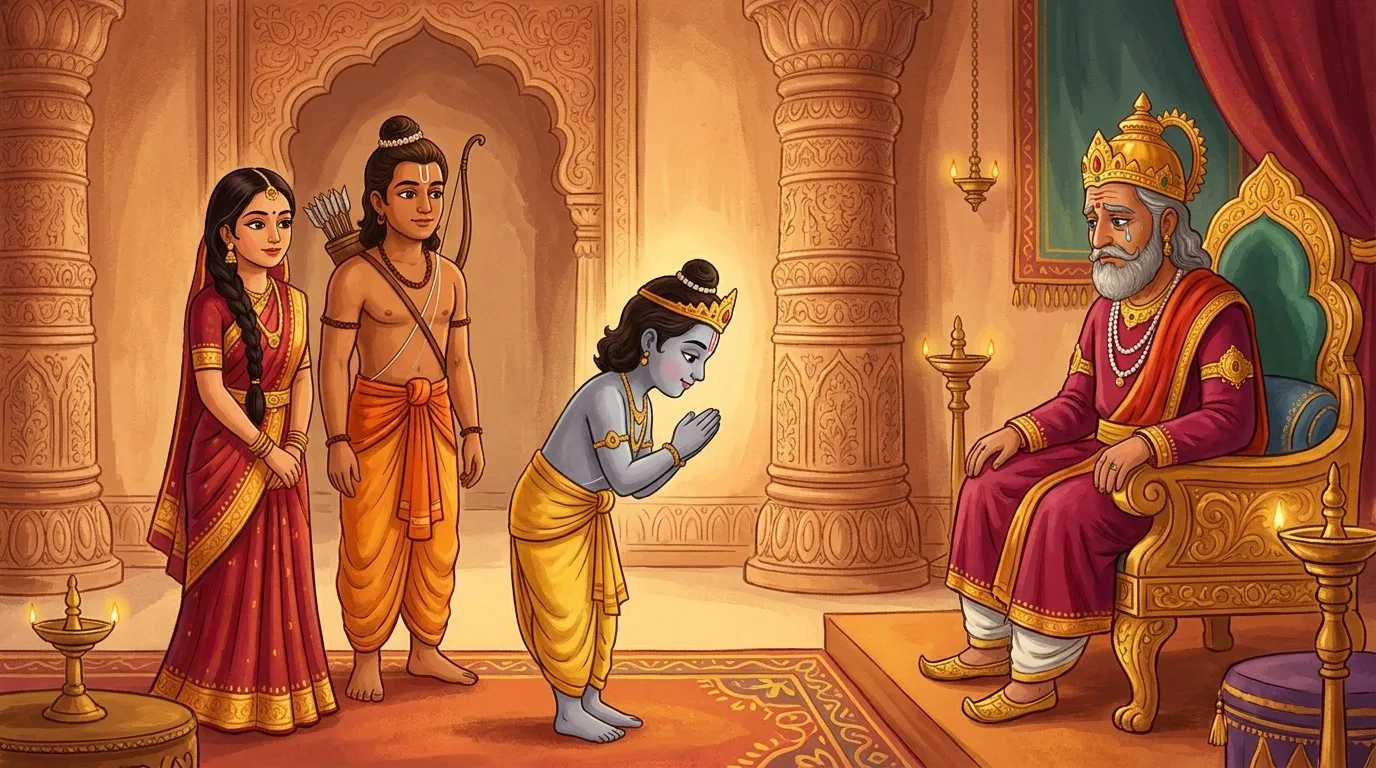
Now she asked for them: her own son Bharat should be king, and Ram should go and live in the forest for fourteen years. The king was heartbroken, but a promise is a promise. Ram did not argue or get angry. He bowed to his father and said he would go, so that his father's word would stay true.
Sita, his wife, said, "Where you go, I go." His brother Lakshman would not stay behind either. And Bharat, who loved Ram dearly, refused to sit on the throne. He placed Ram's sandals on it, and ruled only in Ram's name, waiting for him to come home.
बहुत समय पहले, अयोध्या में राजा दशरथ राज करते थे। उनके चार बेटे थे, और सबसे बड़े बेटे राम को उनकी दया और न्याय के लिए सब प्यार करते थे। जब राजा बूढ़े हुए, तो उन्होंने तय किया कि राम अगले राजा बनेंगे, और पूरा शहर उत्सव की तैयारी में लग गया। लेकिन बरसों पहले राजा ने अपनी रानी कैकेयी को दो वरदान देने का वचन दिया था।
अब कैकेयी ने वे वरदान माँग लिए: उनका अपना बेटा भरत राजा बने, और राम चौदह साल के लिए वन में जाकर रहें। राजा का दिल टूट गया, पर वचन तो वचन होता है। राम ने न बहस की, न गुस्सा किया। उन्होंने पिता को प्रणाम किया और कहा कि वे वन जाएँगे, ताकि पिता का वचन सच्चा रहे। उनकी पत्नी सीता बोलीं, "जहाँ आप, वहाँ मैं।"
उनके भाई लक्ष्मण भी पीछे नहीं रुके। और भरत, जो राम से बहुत प्यार करते थे, सिंहासन पर नहीं बैठे। उन्होंने राम की खड़ाऊँ सिंहासन पर रखीं, और राम के नाम पर ही राज किया, उनके लौटने की राह देखते हुए।
Life in the Forestवन में जीवन
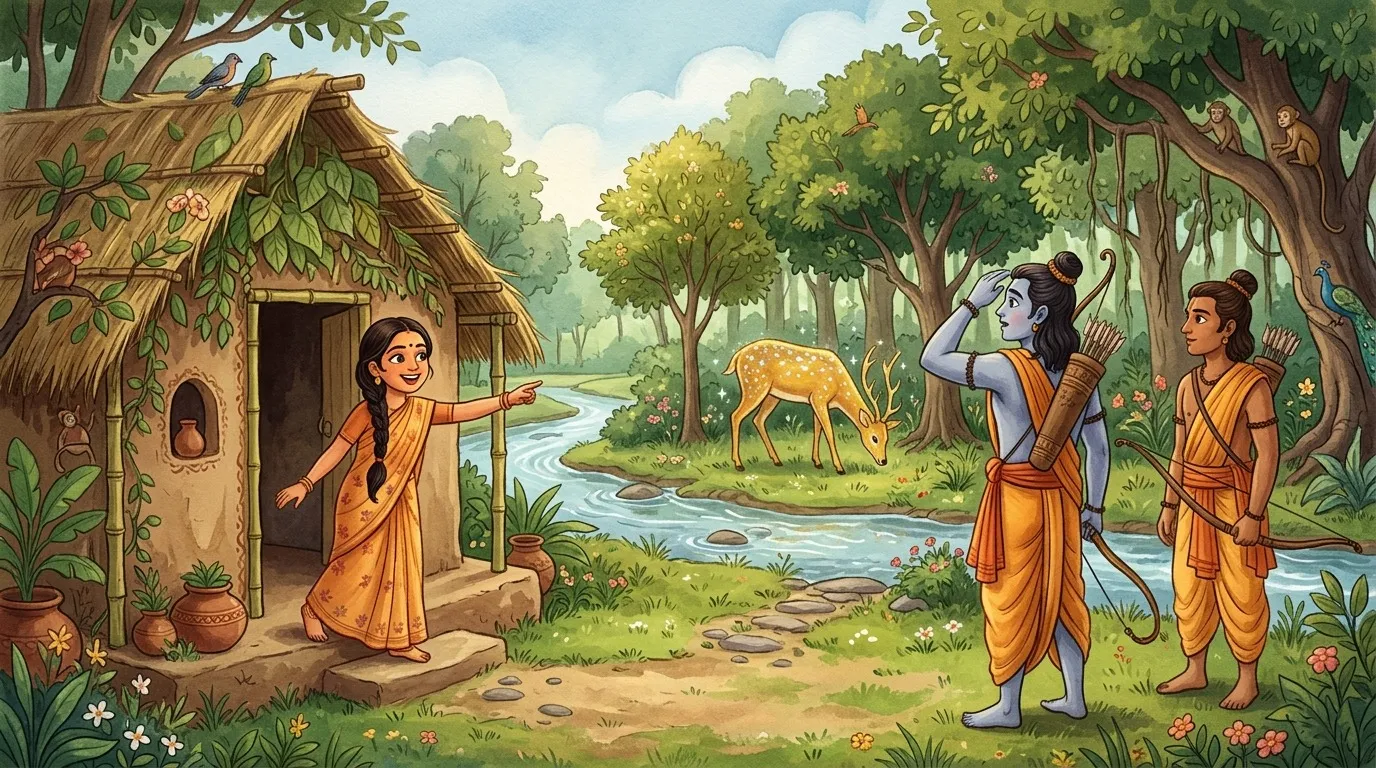
Ram, Sita and Lakshman made a simple home of leaves and branches in a forest called Panchavati, beside the river Godavari. They ate fruits and roots, drank from clear streams, and made friends with the wise sages who lived there. Every night, Lakshman stayed awake to keep watch, so that his brother and Sita could rest safely.
One day, a beautiful golden deer with silver spots came dancing near their hut. Sita had never seen anything like it. "Could you catch it for me?" she asked. Ram followed the deer, deeper and deeper into the forest. But the deer was not really a deer. It was a trick: a demon in disguise, sent to lead Ram far away from home.
राम, सीता और लक्ष्मण ने गोदावरी नदी के किनारे, पंचवटी नाम के वन में पत्तों और टहनियों से एक सादी-सी कुटिया बनाई। वे फल और कंद-मूल खाते, साफ़ झरनों का पानी पीते, और वहाँ रहने वाले ज्ञानी ऋषियों से उनकी दोस्ती हो गई। हर रात लक्ष्मण जागकर पहरा देते, ताकि उनके भाई और सीता चैन से आराम कर सकें।
एक दिन, चाँदी जैसे धब्बों वाला एक सुंदर सुनहरा हिरण उनकी कुटिया के पास उछलता हुआ आया। सीता ने ऐसा हिरण पहले कभी नहीं देखा था। उन्होंने कहा, "क्या आप इसे मेरे लिए पकड़ लाएँगे?" राम हिरण के पीछे-पीछे वन में दूर, और दूर चले गए। लेकिन वह सच में हिरण नहीं था। वह एक चाल थी: भेष बदले हुए एक राक्षस की, जिसे राम को घर से दूर ले जाने के लिए भेजा गया था।
Sita Is Takenसीता का हरण
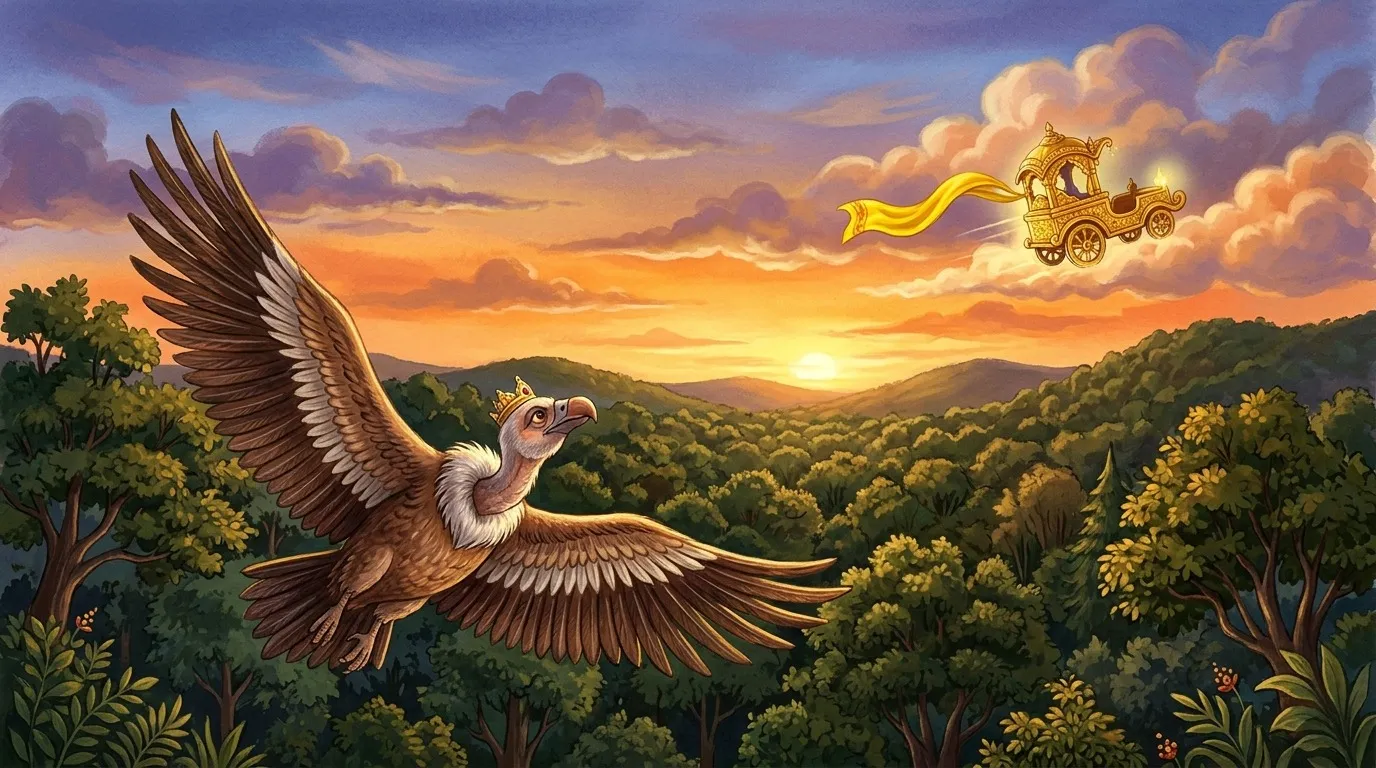
While Ram and Lakshman were away, a holy man in saffron robes came to the hut and asked for food. Kind Sita stepped out to give him some. At once, the holy man showed who he really was: Ravana, the mighty king of Lanka, with ten heads and twenty arms. He carried Sita away in his flying chariot.
An old vulture named Jatayu saw them and flew up to stop Ravana. Jatayu was old, and Ravana was strong, but Jatayu fought bravely until his wings were hurt and he fell to the ground. When Ram and Lakshman found him, Jatayu used his last strength to tell them which way Ravana had gone.
He had done everything he could to help. Ram never forgot him.
जब राम और लक्ष्मण दूर थे, तब भगवा वस्त्र पहने एक साधु कुटिया पर आया और भिक्षा माँगी। दयालु सीता उसे भोजन देने बाहर आईं। उसी पल साधु ने अपना असली रूप दिखाया: वह लंका का शक्तिशाली राजा रावण था, दस सिरों और बीस भुजाओं वाला। वह सीता को अपने उड़ने वाले रथ में उठा ले गया।
जटायु नाम के एक बूढ़े गिद्ध ने यह देखा, और रावण को रोकने के लिए ऊपर उड़ा। जटायु बूढ़े थे और रावण ताक़तवर, फिर भी जटायु बहादुरी से लड़ते रहे, जब तक उनके पंख घायल होकर वे धरती पर नहीं गिर पड़े। जब राम और लक्ष्मण उन्हें मिले, तो जटायु ने अपनी आख़िरी ताक़त से उन्हें बताया कि रावण किस ओर गया है।
उनसे जितनी मदद हो सकती थी, उन्होंने की। राम उन्हें कभी नहीं भूले।
Friends Along the Wayराह के साथी
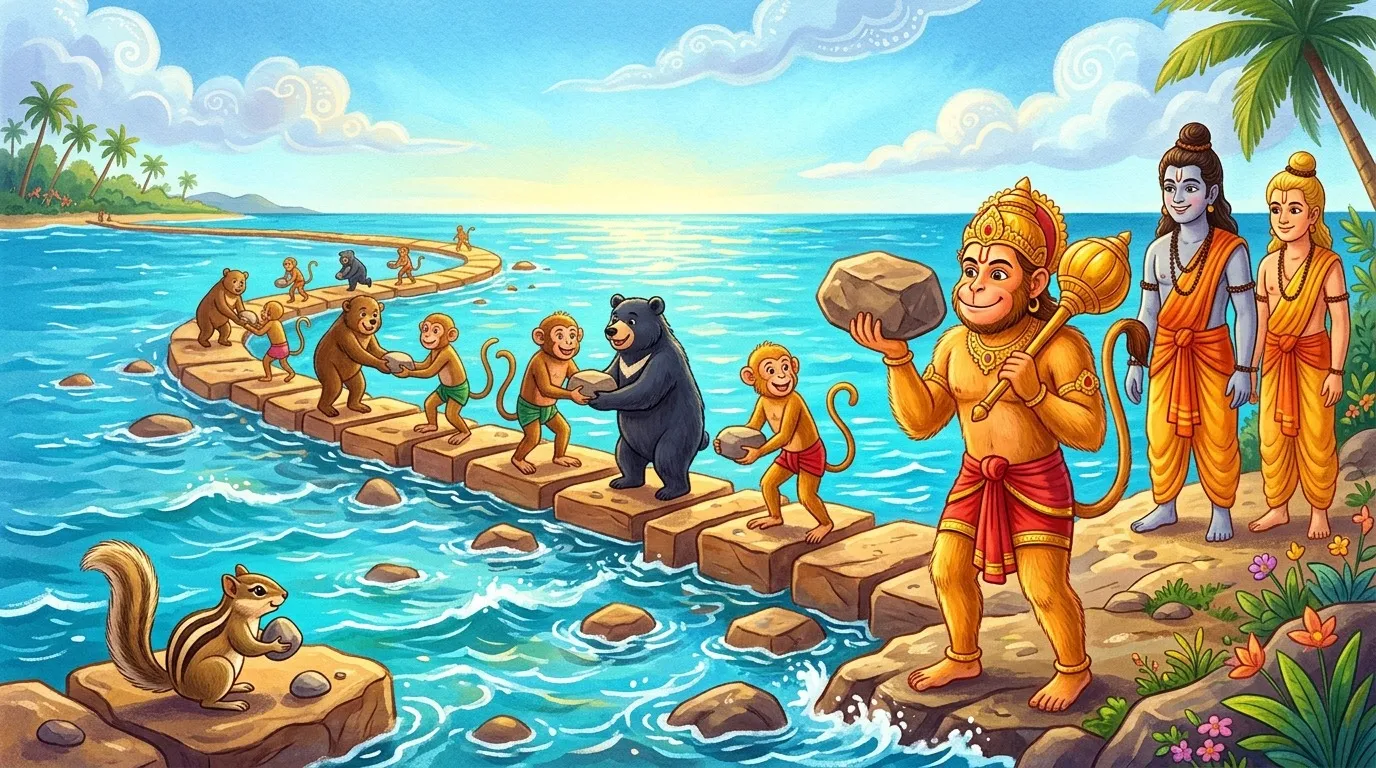
Searching for Sita, Ram and Lakshman met the monkey king Sugriva and his wisest, strongest friend, Hanuman. Hanuman became Ram's most devoted helper. With one giant leap, he crossed the ocean to the island of Lanka. There he found Sita sitting sadly under a tree in a garden, and he gave her Ram's ring, so she would know that help was coming.
To bring an army across the sea, everyone worked together to build a bridge of stones: strong monkeys, big bears, and, grandparents say, even a little squirrel carrying tiny pebbles. Ram stroked its back in thanks, and squirrels have worn three stripes ever since.
Even Ravana's own brother, Vibhishana, told Ravana that taking Sita was wrong. When Ravana would not listen, Vibhishana left Lanka and came to Ram's side.
सीता को खोजते हुए राम और लक्ष्मण वानरराज सुग्रीव और उनके सबसे बुद्धिमान और बलवान मित्र हनुमान से मिले। हनुमान राम के सबसे सच्चे सेवक बन गए। एक ही बड़ी छलाँग में वे समुद्र पार करके लंका द्वीप पहुँच गए। वहाँ उन्होंने सीता को एक बगीचे में पेड़ के नीचे उदास बैठे पाया, और उन्हें राम की अँगूठी दी, ताकि उन्हें पता चले कि मदद आ रही है।
सेना को समुद्र पार ले जाने के लिए सबने मिलकर पत्थरों का पुल बनाया: बलवान वानरों ने, बड़े-बड़े भालुओं ने, और दादा-दादी कहते हैं, एक छोटी-सी गिलहरी ने भी, जो छोटे-छोटे कंकड़ ला रही थी। राम ने धन्यवाद में उसकी पीठ सहलाई, और तभी से गिलहरियों पर तीन धारियाँ हैं। यहाँ तक कि रावण के अपने भाई विभीषण ने भी रावण से कहा कि सीता को ले आना ग़लत है।
जब रावण ने उनकी बात नहीं मानी, तो विभीषण लंका छोड़कर राम के साथ आ गए।
Good Winsअच्छाई की जीत
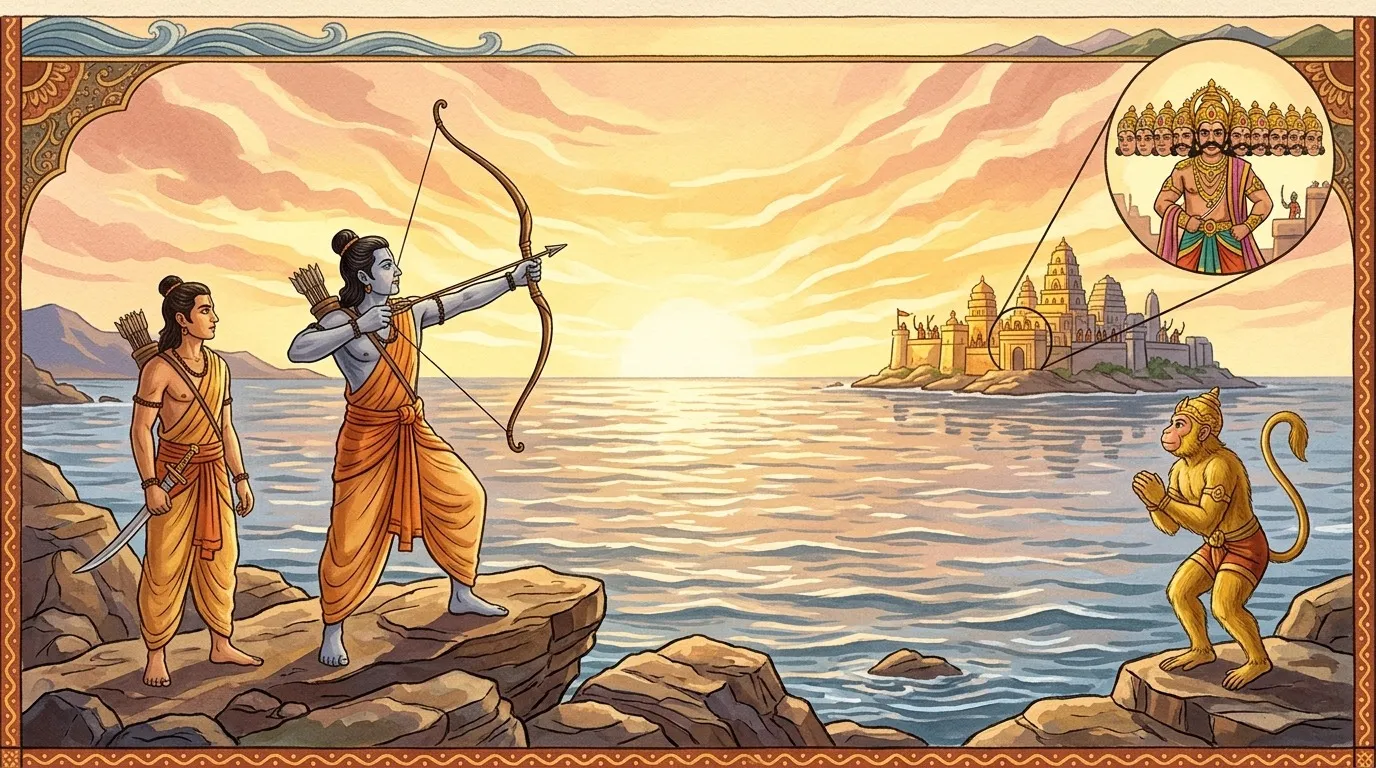
Ram sent a message to Ravana: return Sita, and there will be no war. But Ravana was too proud to listen. So a great battle began, and it lasted many days. Ravana was clever and powerful, but his pride had made him forget what was right. In the end, Ram's arrow defeated him, and Sita was free.
Many families celebrate this victory as Dussehra, also called Vijayadashami, about twenty days before Diwali. In many towns, huge figures of Ravana are burned that evening, to remember that pride and wrongdoing do not win in the end. Ram made Vibhishana the new king of Lanka, because he had stood up for what was right, even when it was hard.
राम ने रावण को संदेश भेजा: सीता को लौटा दो, तो युद्ध नहीं होगा। लेकिन रावण घमंड में डूबा था, उसने बात नहीं मानी। तब एक बड़ा युद्ध शुरू हुआ, जो कई दिनों तक चला। रावण चतुर और शक्तिशाली था, पर घमंड ने उसे भुला दिया था कि सही क्या है। आख़िर में राम के बाण ने उसे हरा दिया, और सीता मुक्त हो गईं।
बहुत-से परिवार इस जीत को दशहरा, यानी विजयादशमी के रूप में मनाते हैं, दिवाली से लगभग बीस दिन पहले। कई शहरों में उस शाम रावण के बड़े-बड़े पुतले जलाए जाते हैं, यह याद करने के लिए कि घमंड और बुराई आख़िर में नहीं जीतते। राम ने विभीषण को लंका का नया राजा बनाया, क्योंकि वे सही बात के लिए खड़े हुए थे, तब भी जब यह मुश्किल था।
The Way Home Is Litरोशनी से सजा घर का रास्ता
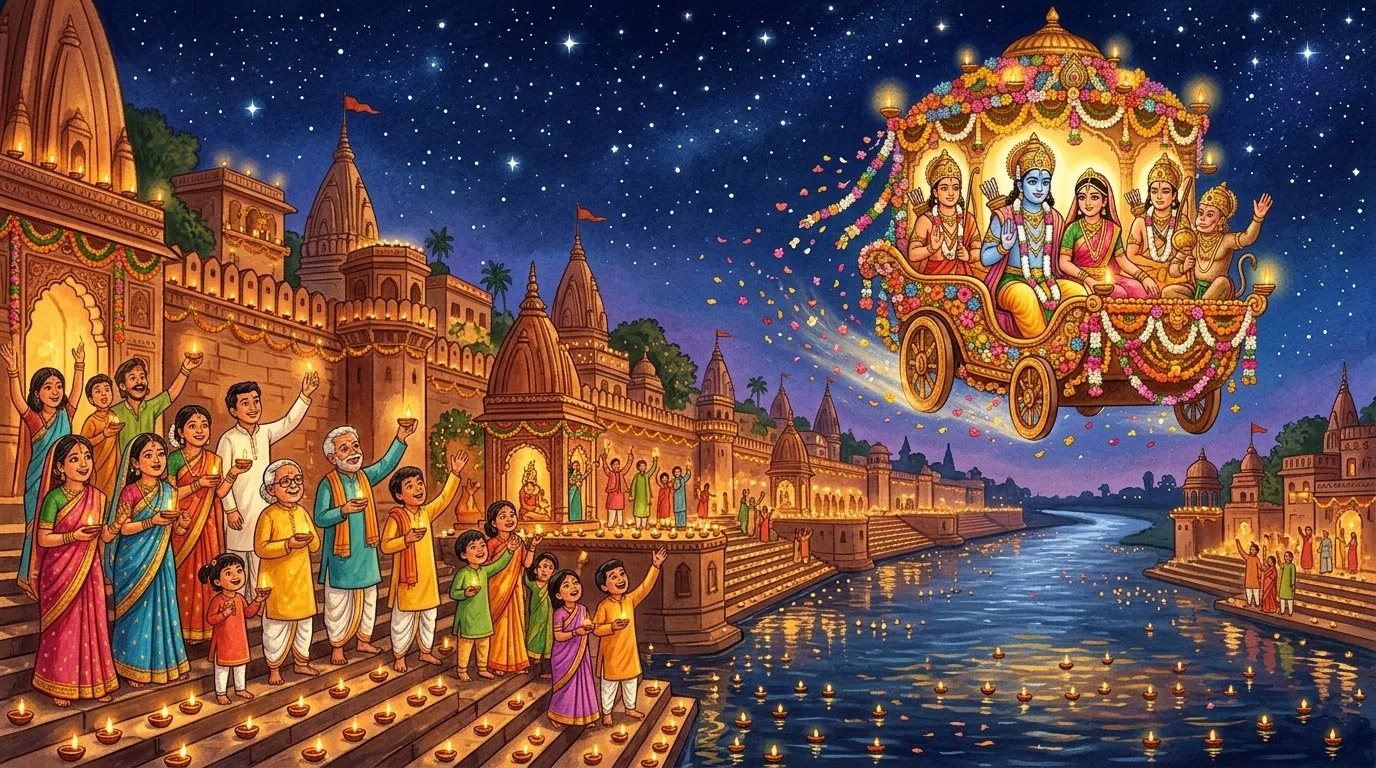
At last, the fourteen years were over. Ram, Sita and Lakshman flew home to Ayodhya in a flying chariot called the Pushpak Vimana, with Hanuman and their friends. Bharat ran to meet his brother, and gave him back his sandals, and his throne. It was amavasya, the darkest night of the month, with no moon at all.
So the people of Ayodhya lit rows and rows of clay lamps, on rooftops, along the streets and by the river, to welcome Ram home. The whole city glowed. That, many families say, was the very first Diwali. And every year since, we light diyas to remember that light wins over darkness, and that someone we love has come home.
आख़िरकार चौदह साल पूरे हुए। राम, सीता और लक्ष्मण, हनुमान और अपने साथियों के साथ, पुष्पक विमान नाम के उड़ने वाले रथ में अयोध्या लौटे। भरत दौड़कर अपने भाई से मिले, और उन्हें उनकी खड़ाऊँ और उनका सिंहासन लौटा दिया। वह अमावस्या की रात थी, महीने की सबसे अँधेरी रात, जब चाँद बिल्कुल नहीं होता।
तो अयोध्या के लोगों ने राम के स्वागत में छतों पर, गलियों में और नदी किनारे मिट्टी के दीयों की क़तारें जला दीं। पूरा शहर जगमगा उठा। बहुत-से परिवार कहते हैं कि वही पहली दिवाली थी। और तब से हर साल हम दीये जलाते हैं, यह याद करने के लिए कि रोशनी अँधेरे से जीतती है, और कोई अपना घर लौट आया है।
One Night, Many Storiesएक रात, कई कहानियाँ
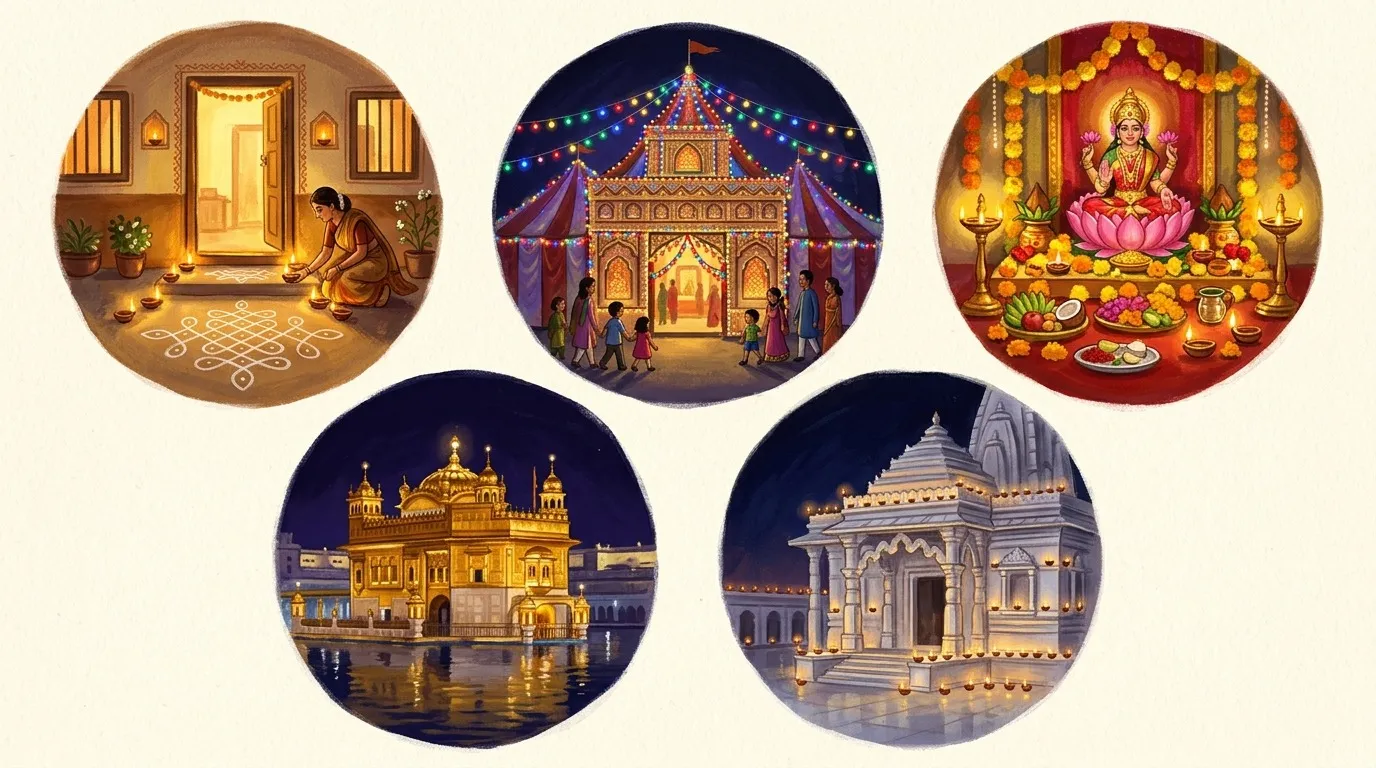
Diwali is celebrated all over India, and families tell different stories about it. In much of south India, the day before Diwali remembers how Krishna, with his wife Satyabhama, defeated the demon king Narakasura and set free the thousands of people he had imprisoned.
In Bengal, Odisha and Assam, the same night is Kali Puja, honouring the goddess Kali, who protects the world from evil. In many homes, Diwali evening is for Lakshmi, the goddess of wealth and well-being, who people believe visits homes that are clean, bright and welcoming.
Sikhs celebrate Bandi Chhor Divas. Guru Hargobind Sahib was set free from Gwalior Fort, and he would not leave until fifty-two imprisoned kings were freed with him. When he returned to Amritsar, the Golden Temple was lit with lamps. For Jains, Diwali is the day Lord Mahavira attained nirvana, and people lit lamps to keep the light of his teaching shining.
Different stories, the same message: light, freedom and goodness win.
दिवाली पूरे भारत में मनाई जाती है, और परिवार इसकी अलग-अलग कहानियाँ सुनाते हैं। दक्षिण भारत के बड़े हिस्से में दिवाली से एक दिन पहले याद किया जाता है कि कैसे कृष्ण ने अपनी पत्नी सत्यभामा के साथ मिलकर राक्षस राजा नरकासुर को हराया, और उसकी क़ैद में बंद हज़ारों लोगों को आज़ाद कराया।
बंगाल, ओडिशा और असम में यही रात काली पूजा की होती है, देवी काली के सम्मान में, जो दुनिया को बुराई से बचाती हैं। बहुत-से घरों में दिवाली की शाम लक्ष्मी जी की होती है, धन और सुख-समृद्धि की देवी, जिनके बारे में माना जाता है कि वे साफ़-सुथरे, रोशन और स्वागत करने वाले घरों में आती हैं।
सिख बंदी छोड़ दिवस मनाते हैं। गुरु हरगोबिंद साहिब ग्वालियर के क़िले से रिहा हुए, और वे तब तक नहीं निकले जब तक क़ैद में बंद बावन राजाओं को भी उनके साथ आज़ाद नहीं किया गया। जब वे अमृतसर लौटे, तो स्वर्ण मंदिर दीयों से जगमगा उठा। जैनों के लिए दिवाली वह दिन है जब भगवान महावीर को निर्वाण मिला, और लोगों ने उनकी शिक्षा की रोशनी को जगमगाए रखने के लिए दीये जलाए।
कहानियाँ अलग हैं, संदेश एक: रोशनी, आज़ादी और अच्छाई की जीत होती है।
The five days of Diwaliदिवाली के पाँच दिन
In many parts of India, Diwali is a five-day festival.भारत के कई हिस्सों में दिवाली पाँच दिन का त्योहार है।
- 1
Dhanterasधनतेरस
Families buy something new, often a metal pot or a little gold or silver, for a lucky year, and remember Dhanvantari, the god of medicine and good health.परिवार साल भर की ख़ुशहाली के लिए कुछ नया ख़रीदते हैं, अक्सर कोई बर्तन या थोड़ा सोना-चाँदी, और सेहत के देवता धन्वंतरि को याद करते हैं।
- 2
Naraka Chaturdashi (Choti Diwali)नरक चतुर्दशी (छोटी दिवाली)
Krishna's victory over Narakasura. In the south, the day starts before sunrise with an oil bath, new clothes and the first lamps.कृष्ण की नरकासुर पर जीत। दक्षिण में दिन सूरज निकलने से पहले तेल-स्नान, नए कपड़ों और पहले दीयों से शुरू होता है।
- 3
Diwali and Lakshmi Pujaदिवाली और लक्ष्मी पूजा
The new-moon night: diyas everywhere, rangoli at the door, prayers to Lakshmi (and Kali in the east), sweets with family and neighbours.अमावस्या की रात: हर तरफ़ दीये, दरवाज़े पर रंगोली, लक्ष्मी जी की पूजा (और पूर्व में काली पूजा), परिवार और पड़ोसियों के साथ मिठाई।
- 4
Govardhan Pujaगोवर्धन पूजा
Remembers Krishna lifting Govardhan hill to shelter people and cows from a great storm. Many temples offer a 'mountain' of food (Annakut). It is also New Year for many Gujarati families, and Bali Pratipada in Maharashtra and Karnataka.कृष्ण के गोवर्धन पर्वत उठाकर लोगों और गायों को भारी तूफ़ान से बचाने की याद। कई मंदिरों में भोजन का 'पहाड़' (अन्नकूट) चढ़ाया जाता है। यह कई गुजराती परिवारों का नया साल भी है, और महाराष्ट्र व कर्नाटक में बलि प्रतिपदा।
- 5
Bhai Doojभाई दूज
Sisters put a tilak on their brothers and pray for them; brothers promise to care for their sisters. Cousins count too!बहनें भाइयों को तिलक लगाकर उनके लिए प्रार्थना करती हैं; भाई बहनों का ख़याल रखने का वादा करते हैं। चचेरे-ममेरे भाई-बहन भी!
Why do we do it?हम ऐसा क्यों करते हैं?
Diyasदीये
A small flame beats a big darkness. Diyas stand for light over darkness and knowledge over ignorance, and they welcome people home, just as Ayodhya welcomed Ram.एक छोटी-सी लौ बड़े अँधेरे को हरा देती है। दीये अँधेरे पर रोशनी और अज्ञान पर ज्ञान की जीत के प्रतीक हैं, और वे अपनों का स्वागत करते हैं, जैसे अयोध्या ने राम का किया।
Rangoliरंगोली
A colourful welcome at the door for guests and for Lakshmi. Traditional rangoli and kolam are made with rice flour, which also feeds ants and little birds: a welcome for every creature.दरवाज़े पर मेहमानों और लक्ष्मी जी के लिए रंग-बिरंगा स्वागत। पारंपरिक रंगोली और कोलम चावल के आटे से बनते हैं, जिससे चींटियों और छोटी चिड़ियों को भी खाना मिलता है: हर जीव का स्वागत।
Cleaning and new clothesसफ़ाई और नए कपड़े
A fresh start for a new year. Families clean every corner to welcome Lakshmi, and many give the things they no longer use to people who need them.नए साल की नई शुरुआत। परिवार लक्ष्मी जी के स्वागत के लिए हर कोना साफ़ करते हैं, और बहुत-से लोग अपनी काम में न आने वाली चीज़ें ज़रूरतमंदों को दे देते हैं।
Sweets and giftsमिठाई और उपहार
Joy grows when it is shared. Families send sweets to neighbours and friends of every faith, and to the people who help us all year.ख़ुशी बाँटने से बढ़ती है। परिवार हर धर्म के पड़ोसियों और दोस्तों को मिठाई भेजते हैं, और उन लोगों को भी जो साल भर हमारी मदद करते हैं।
Lakshmi Pujaलक्ष्मी पूजा
A thank-you for everything we have, and a prayer for a good year for everyone. Many families leave a door or window open so that Lakshmi can come in.जो कुछ हमारे पास है, उसके लिए धन्यवाद, और सबके अच्छे साल की प्रार्थना। बहुत-से परिवार एक दरवाज़ा या खिड़की खुली रखते हैं ताकि लक्ष्मी जी अंदर आ सकें।
Fewer crackersकम पटाखे
Many families now choose few or no crackers: the smoke hurts the air we all breathe, and the noise frightens animals, babies and old people. Diyas make the festival just as bright.बहुत-से परिवार अब कम या बिल्कुल पटाखे नहीं चलाते: धुआँ उस हवा को ख़राब करता है जिसमें हम सब साँस लेते हैं, और शोर से जानवर, छोटे बच्चे और बुज़ुर्ग डर जाते हैं। दीये त्योहार को उतना ही रोशन कर देते हैं।
What the story teaches usकहानी हमें क्या सिखाती है
Keep your promisesअपना वचन निभाओ
Ram went to the forest so that his father's word stayed true.राम वन गए ताकि पिता का वचन सच्चा रहे।
Stand by your familyपरिवार का साथ दो
Lakshman and Sita went with Ram; Bharat kept the throne safe for him.लक्ष्मण और सीता राम के साथ गए; भरत ने उनके लिए सिंहासन सँभाला।
Help, however small you areमदद करो, चाहे कितने भी छोटे हो
Old Jatayu and the little squirrel did all they could.बूढ़े जटायु और छोटी गिलहरी ने जितना हो सका, किया।
Do what is right, even when it is hardसही करो, चाहे मुश्किल हो
Vibhishana told his own brother he was wrong.विभीषण ने अपने ही भाई से कहा कि वह ग़लत है।
Pride comes before a fallघमंड का सिर नीचा
Ravana was clever and strong, but too proud to listen.रावण चतुर और ताक़तवर था, पर इतना घमंडी कि उसने किसी की नहीं सुनी।
Welcome and shareस्वागत करो, बाँटो
Ayodhya lit up the night for Ram; we share sweets with everyone.अयोध्या ने राम के लिए रात रोशन कर दी; हम सबके साथ मिठाई बाँटते हैं।
Quick quizछोटी-सी क्विज़
1. Why did Ram go to live in the forest?राम वन में रहने क्यों गए?
2. What did Bharat place on the throne?भरत ने सिंहासन पर क्या रखा?
3. Who tried to stop Ravana from taking Sita?रावण को सीता को ले जाने से किसने रोकने की कोशिश की?
4. How did Hanuman show Sita that help was coming?हनुमान ने सीता को कैसे बताया कि मदद आ रही है?
5. Why did the people of Ayodhya light so many diyas?अयोध्या के लोगों ने इतने दीये क्यों जलाए?
6. What do Sikhs celebrate on Diwali?सिख दिवाली पर क्या मनाते हैं?
7. For Jains, Diwali is the day when...जैनों के लिए दिवाली वह दिन है जब...
8. On which day do brothers and sisters celebrate each other?किस दिन भाई-बहन एक-दूसरे के लिए त्योहार मनाते हैं?
Talk about it at dinnerखाने पर बात कीजिए
- When did you keep a promise, even though it was hard?तुमने कब कोई वादा निभाया, जबकि वह मुश्किल था?
- Who in our family is like Lakshman, always by your side?हमारे परिवार में कौन लक्ष्मण जैसा है, जो हमेशा तुम्हारे साथ रहता है?
- What small thing can you do to help someone this Diwali, like the little squirrel?इस दिवाली तुम छोटी गिलहरी की तरह किसकी, क्या छोटी-सी मदद कर सकते हो?
Where this story comes fromयह कहानी कहाँ से है
This telling follows Valmiki's Ramayana for the main story (Kaikeyi's two boons, Bharat ruling with Ram's sandals, Panchavati, the golden deer, Jatayu, Hanuman and the ring, Vibhishana, the return in the Pushpak Vimana). Three parts come from living tradition rather than Valmiki: the squirrel's stripes, the lamps lit in Ayodhya on Ram's return, and the twenty days between Dussehra and Diwali. Retellings such as Tulsidas's Ramcharitmanas and Kamban's Ramavataram differ in details.मुख्य कहानी वाल्मीकि रामायण के अनुसार है (कैकेयी के दो वरदान, भरत का राम की खड़ाऊँ रखकर राज करना, पंचवटी, सुनहरा हिरण, जटायु, हनुमान और अँगूठी, विभीषण, पुष्पक विमान से वापसी)। तीन बातें वाल्मीकि से नहीं, लोक-परंपरा से आती हैं: गिलहरी की धारियाँ, राम के लौटने पर अयोध्या में दीये जलाना, और दशहरे और दिवाली के बीच बीस दिन। तुलसीदास की रामचरितमानस और कंबन की रामावतारम् जैसी कथाओं में ब्योरे अलग हैं।
The pictures and the narrating voice are made with AI; every spoken chapter is checked against its text. If your family tells it differently, please write to us at official@ujjwalbharat.com.तस्वीरें और सुनाने वाली आवाज़ AI से बनी हैं; हर बोला गया अध्याय उसके पाठ से मिलाया गया है। अगर आपके परिवार में यह कहानी अलग तरह से सुनाई जाती है, तो हमें official@ujjwalbharat.com पर लिखिए।